Chapter 6: A Fracture in the Foundation
The legal machinery moved with terrifying, uncharacteristic velocity over the next forty-eight hours. The combination of the hospital’s mandate, the visceral horror of the recovered video, and the coordinated delay of medical care generated an immediate, undeniable safety crisis.
The judge signed the emergency ex parte orders without hesitation.
By noon on Thursday, Grant realized the gravity of his isolation. His phone barrage began. The texts flooded my locked screen, each one a masterclass in narcissistic deflection.
Mara, this is getting completely out of control.
You know damn well Caleb didn’t mean for her to hit the rocks. It was an accident.
Why are you trying to destroy my family over a mistake?
We can handle this internally. Call the cops off.
You’re using your old job to intimidate everyone. You’re sick.
I sat in the sterile hospital chair, reading that final message twice. My job.
He was still clinging to the delusion that my badge was the inciting incident. He couldn’t comprehend that the credential was merely the key that picked the lock, buying me the three seconds I needed to breach their perimeter. Everything that happened after I drove away—the police, the surgeons, the judge—belonged entirely to the consequences of their own monstrous choices.
I typed out a single, clinical reply and hit send:
Sophie is currently receiving surgical treatment. All future communication regarding matters outside of her immediate medical crises must be directed through my legal counsel.
He attempted to call me eleven times. I let every single ring bleed into silence.
Caleb, predictably, went entirely dark, likely advised by a panicked criminal defense attorney.
Diane, however, could not resist attempting to manipulate the narrative. Her text arrived late that night: Mara, please. I am begging you to think about the long-term damage this will do to the family.
I stared at the glowing pixels in the dark room for a very long time. Then, I placed the phone face down on the bedside tray.
For the very first time, I decoded the sinister, unspoken syntax beneath every sentence Diane had ever uttered to me. When she preached ‘Protect the family’, she was never talking about the humans inside it. She was talking about protecting the structure. She was protecting the patriarchal illusion. The child’s safety was completely collateral.
Over the ensuing week, as detectives dragged the relatives into interrogation rooms, the Ellisons’ unified story began to violently buckle under pressure.
First, they claimed Sophie had simply tripped. When confronted with the medical impossibility of the fracture pattern, the story evolved: Caleb had “tapped” her shoulder to calm her down, and she had dramatically thrown herself backward. Then, Grant attempted to argue that his video had magically cut out right before the impact, making it impossible to prove Caleb’s intent.
That lie held water for exactly four hours, until the digital forensics lab confirmed the unedited file explicitly showed the backhand strike.
But it was the driveway footage that truly trapped them in a paradox.
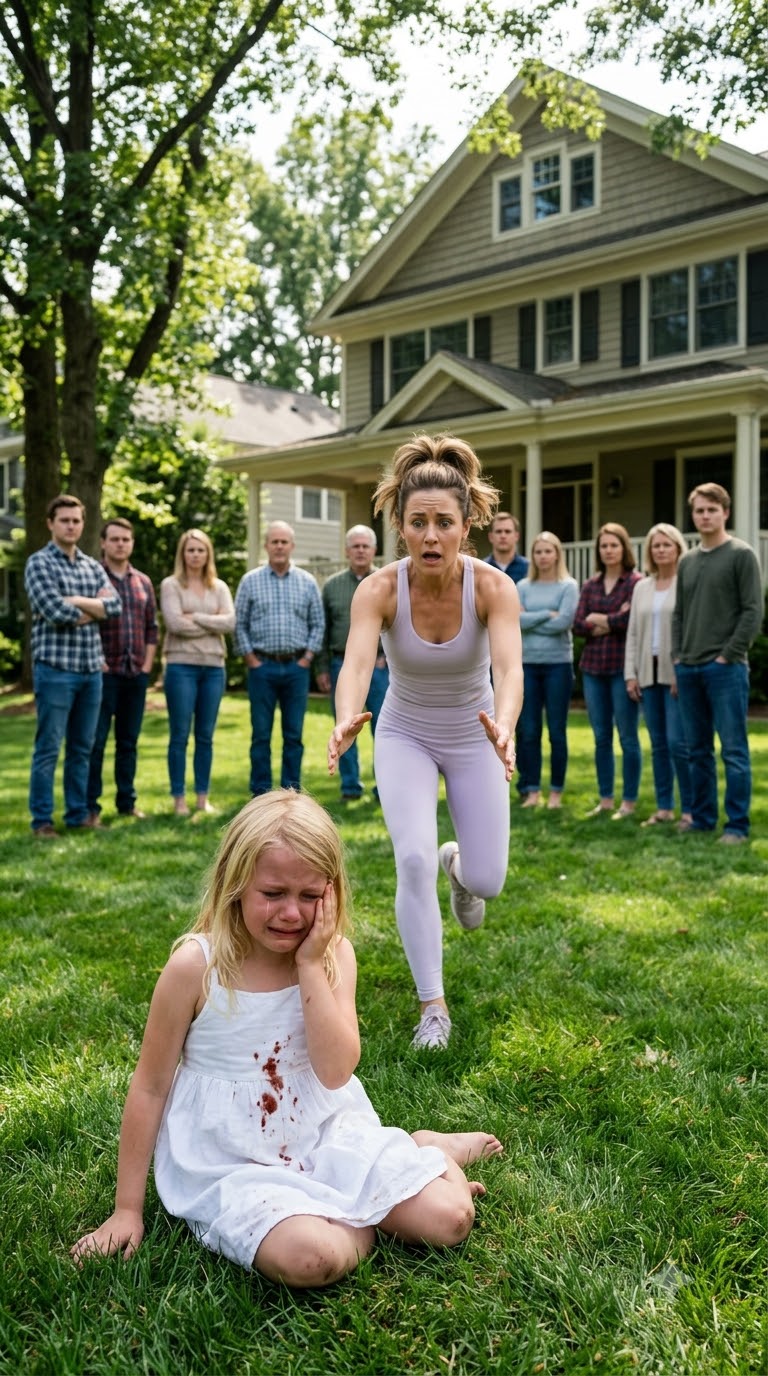
The exterior security cameras mounted on Grant’s garage captured the entire blockade in stark, high-definition silence. It showed me carrying a limp, bleeding child. It showed the clan swarming the vehicle. It showed the physical intimidation tactics. It showed Grant wedging himself against the door.
There was no audio, but there didn’t need to be. Their defense attorneys now had the impossible task of explaining their physical geometry. If everyone present genuinely agreed the child required a hospital, why were eleven adults barricading the exit? Why didn’t Grant dial 911?
A shared conspiracy only holds its shape as long as every single conspirator remembers the exact dimensions of the lie.
“Don’t get complacent,” Leah warned me over the phone, reviewing the police summaries. “They’re rats in a corner. They are historically at their most dangerous when they feel trapped.”
“I know,” I breathed, staring out the hospital window at the sprawling city.
And I did know. Because the memory of my early marriage still haunted me. Back then, the Ellison clan’s suffocating closeness had masqueraded as a safety net. If someone’s roof leaked, three uncles appeared with tarps. If someone needed a loan, the hat was passed. For a woman whose career required hyper-vigilant isolation, their overwhelming certainty of belonging had initially felt like a warm blanket.
The suffocating cost of that blanket had revealed itself by a thousand tiny cuts. Caleb dictating financial decisions for everyone. Diane redefining ‘compromise’ to mean ‘surrender to my will’. And Grant, forever playing the loyal soldier, defending their toxicity while gaslighting my discomfort. I had absorbed their abuse for years to prove I wasn’t the “difficult, cold federal agent” they accused me of being.
They hadn’t suddenly transformed into a cartel willing to block a wounded child from a hospital. They had simply utilized their standard operating procedure—collective psychological intimidation—and pushed the throttle one degree too far.
The truth finally broke from the inside out.
Owen Ellison gave his formal statement to the police on a Tuesday. I didn’t hear it from him; Leah relayed the transcript.
Owen had defected.
He cracked under the guilt. He sat in a sterile interrogation room and systematically dismantled the family’s defense. He confirmed Caleb struck her with force. He confirmed Grant recorded and mocked her. He explicitly confirmed that Diane ordered everyone to “get their stories straight” before allowing me to be called. And, most damningly, he confessed that the driveway blockade was a premeditated tactic to hold me hostage until I agreed to their fabricated version of events.
Owen didn’t magically become a hero. He had still stood in that driveway. But he became the first Ellison in three generations to choose objective reality over the cult of the bloodline.
The blowback was instantaneous and brutal. Caleb publicly branded him a traitor. Grant blocked his number. Diane showed up at his apartment and wept on his doorstep, begging him to recant.
He refused.
And once the weakest link broke, the structural integrity of the lie collapsed. Cousins suddenly “remembered” Caleb being aggressive. Aunts admitted they thought Sophie needed an ambulance immediately. The dominoes fell in a chaotic, self-serving clatter.
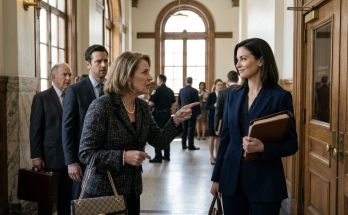
But the final, fatal blow came during a sworn civil deposition. Diane was cornered by Leah. She was presented with the video, the audio, and the physical reality of the situation.
“Mrs. Ellison, under penalty of perjury, did you visually witness your eldest son, Caleb, strike your granddaughter?”
Diane had a choice. She could minimize. She could pontificate about misunderstandings. But legally, she had to answer the binary question.
She stared at the mahogany table, her perfectly manicured hands trembling.
“Yes.”
One single word. It detonated the family mythos faster than a shaped charge.