Chapter 7: The Eviction & The Aftermath
The pungent scent of shattered illusions lingered in the living room long after Evelyn stopped speaking. It smelled exactly like ozone after a violent electrical storm.
The pastor slowly stood up. He placed a heavy hand on Arthur’s trembling shoulder. It wasn’t a gesture of comfort; it was an escort. “Arthur, let us step out onto the porch. The elders and I require a private word with you.”
Arthur complied. He shuffled toward the door, his posture stooped, looking decades older than his sixty-six years. He didn’t make eye contact with anyone as he exited. The two elders followed him out, pulling the heavy door shut behind them.
Julian turned and walked blindly toward the kitchen. The back door opened and clicked shut. He simply walked away into the backyard. Nobody called his name to bring him back.
Evelyn finally released the pitcher. She drifted around the coffee table and stood directly in front of my wooden stool. She wrung her hands, the gold of her wedding band catching the light.
“Well, Elara,” she whispered, her voice devoid of its signature dramatic sigh. “The secrets are all out in the open now. The air is cleared. There is absolutely no reason to proceed with the sale. Cancel the contract. Let us stay here. We can fix this mess.”
I looked up at the woman who had handed me an itemized bill for my own survival.
“The closing date stands, Mom,” I said softly. “The eviction notice is legally binding. You have until the end of the month.”
Evelyn’s mouth opened to protest, but the words died in her throat. For the very first time in my existence, there was no emotional manipulation left in her arsenal to fill the void.
Agatha Gable gathered her purse. As she walked past my stool, she paused. With two wrinkled fingers, she unclasped my leather bag and dropped a small object inside.
It was a faded, yellow paper ticket. The kind torn from a carnival roll. Printed on it was: Admit One – Benefit Supper for Elara.
“You still owe me a dinner,” Agatha murmured, and continued out the front door.
Aunt Clara stood up, offering me her arm. “Let’s go home, kid.”
We walked down the concrete path together. From the safety of my driver’s seat, I watched the three church leaders standing in the yard with Arthur. Not a single one of them was looking him in the eye.
They vacated the premises just hours before the legal deadline. The church deacons, acting out of obligation rather than charity, secured them a depressing rented duplex on the industrial edge of town. Vinyl siding, a crumbling carport. It was eerily similar to the apartment they had been forced into after the initial foreclosure.
The drafted legal eviction papers remained untouched in a folder on my kitchen island. I never needed to file them.
At dusk on their move-out day, I met Martha on the porch. The house was cavernous and silent. Evelyn had pulled all the family portraits from the drywall, leaving behind hundreds of tiny, dark holes—scars of a family that had only existed in photographs.
In the dining room, the heavy oak table and its matching chairs remained exactly where I had placed them five years ago.
“The new buyers asked about the dining set,” Martha noted, her voice echoing in the empty room.
“Leave it,” I instructed. “All of it.”
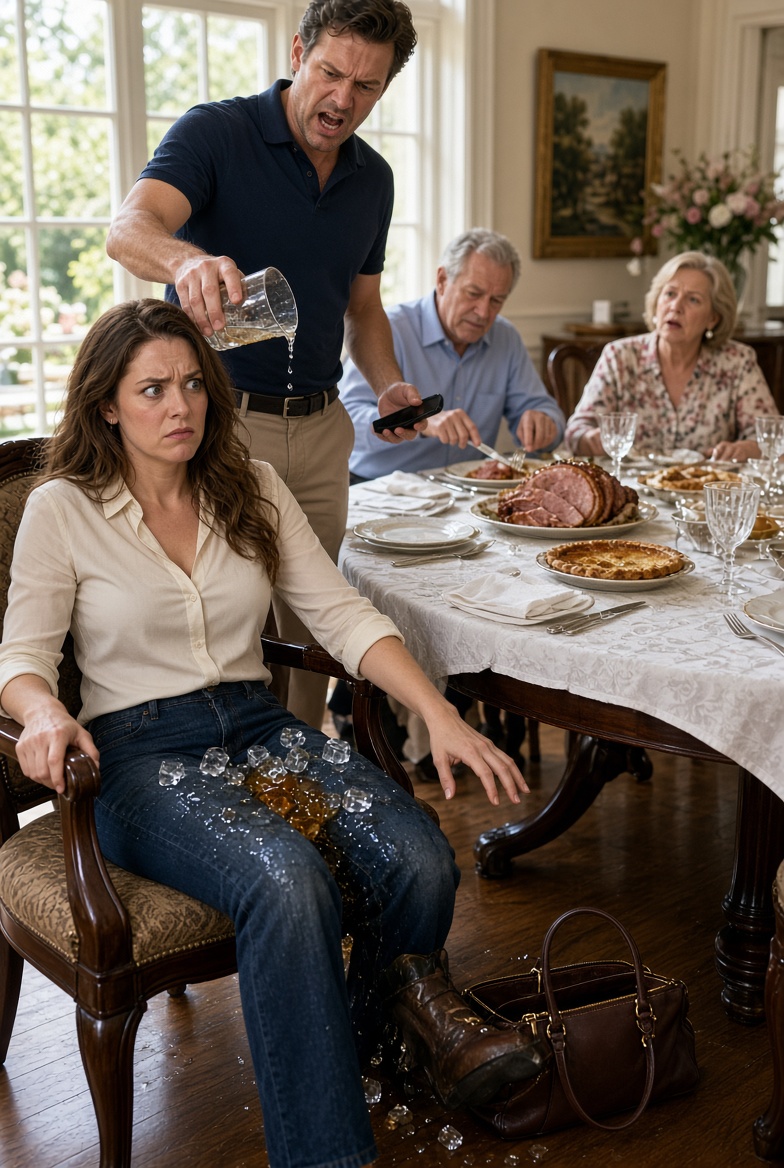
I ran my fingertips along the varnished edge, stopping at the head of the table. There, permanently etched into the wood, was a stark white ring. It was the exact diameter of a highball glass. The permanent water damage where Julian had arrogantly slammed down his sweating iced tea.
I traced the ghost of the glass. Let the new owners sand it down to the raw wood. It was their burden now.
I handed Arthur’s house keys to Martha. They were freezing cold.
Two days later, the Sunday church bulletin featured a microscopic announcement buried on the back page, wedged awkwardly between the youth group car wash schedule and the women’s bake sale.
Agatha texted me a photograph of it before service even concluded.
Elder Arthur Vance has humbly requested to be permanently released from his duties on the consistory, effective immediately. Please keep the Vance family in your silent prayers during this period of private transition.
By Tuesday, the vitriolic Facebook posts had vanished into the digital ether. Evelyn’s friends sent me cowardly, groveling text messages. Elara, I am so sorry. We simply didn’t know the truth. Please forgive us.
I replied to every single one with the exact same phrase: It is okay. Thank you for reaching out.
And then, a text arrived from an unknown number.
I finally tracked down Tyler Hoffman. He lives three hours north in a trailer park. He walks with a permanent limp and a titanium cane. I am driving up there on Saturday to apologize to his face. – Julian.
I read the message, locked the screen, and placed the phone face down. I did not reply. That specific moral debt belonged entirely to him.
The only individual who refused to contact me was Evelyn. Her silence held like a fortress until the actual day of the real estate closing.
I sat in the sterile conference room of the title company, the air conditioner rattling against the July heat. The young couple purchasing the home sat across from me, their fingers intertwined under the mahogany table, vibrating with the excitement of a fresh start.
I signed page after page. With every stroke of my pen, the massive financial anchor I had dragged behind me for half a decade grew lighter. When the escrow officer finally announced that the wire transfer had cleared, the phantom weight vanished entirely.
My phone buzzed against the table. The caller ID flashed Mom.
A text message materialized. Elara, your father is spiraling into a deep depression. I know you are hurting, but please, can’t we just be a family again? Come to the duplex for Christmas. We will make room for you.
Hurting. That was the sanitized vocabulary she chose to apply to decades of financial and emotional extortion.
I opened the keyboard. I typed: I am so sorry, but…
I deleted it. I owed them no apologies.
I typed the only factual statement left between us and pressed send.
I am not hurting anymore, Mom. I am simply done paying the bill. Take care of yourselves.
On the final Saturday of August, the sweet corn ripened across the county. Aunt Clara had dragged an ancient enamel table onto her wraparound porch. Agatha had arrived carrying a massive homemade cherry pie and a sack of heirloom tomatoes.
“Dinner is at six sharp,” Agatha announced, wielding a paring knife. “And I am officially collecting on a debt.”
There were three mismatched chairs arranged around the table. Nobody barked orders about where I was permitted to sit. I pulled out the chair directly between Clara and Agatha, sank into the wood, and grabbed an ear of corn to shuck.
Agatha poured a massive glass of iced tea from a sweating glass pitcher. She slid it across the enamel directly toward me.
“You’re eating tonight,” Agatha commanded, a twinkle in her sharp eyes.
I wrapped my fingers around the cold glass. The condensation chilled my skin. “Thank you,” I whispered. My voice cracked, betraying the dam of emotion holding back a decade of tears.
I braced my muscles, subconsciously waiting for the inevitable follow-up. Waiting for the you owe me, or the don’t be so dramatic, or the presentation of a ledger.
It never came.
“Shuck faster, city girl,” Clara teased, nudging my boot with hers. “You were a lot quicker with your hands when you were sixteen.”
“She was quicker at everything when she was sixteen,” Agatha retorted, slicing a tomato. “And frankly, so were we.”
I laughed. It started as a breathy chuckle and erupted into a full, chest-deep laugh that startled the barn swallows nesting in the eaves.
I ate first. I devoured corn drowned in salted butter. I ate Agatha’s tomatoes. I consumed a massive slice of cherry pie. Nobody scrutinized my posture. Nobody monitored my gratitude levels.
My father had once stood in a doorway, holding a lamp like a scepter, and dared me to calculate the exact cost of my existence. It had taken me fourteen agonizing years to complete the audit.
When the final tally was calculated, the true number was $9,400. And I had paid it back twenty times over, in blood, sweat, and thousands of hollow apologies.
I don’t audit my life like that anymore. I finally understand the fundamental rule of human accounting: A gift that arrives in the mail with an invoice attached was never a gift to begin with. And a family that requires you to remain perpetually in their debt was never truly keeping you.
The porch light flickered on as the sun dipped below the cornfields, drawing a halo of pale moths.
Aunt Clara dragged the worn wooden cribbage board to the center of the table and aggressively tapped a deck of playing cards against the enamel.
“Cut the deck, Elara,” she instructed.
I cut the deck. Clara dealt the cards. And on a pristine, brand-new score sheet, she wrote my name at the very top.
Like and share this post if you find it interesting and believe in the power of reclaiming your own story!