Chapter 2: The Ambush and The Ultimatum
Two weeks prior to the Mother’s Day massacre, my brother had visited my modest city apartment for the very first time in his life.
Julian stood in my narrow entryway, wearing his corporate fleece, his eyes darting around my tiny kitchen as if appraising its meager value. He didn’t offer a greeting. He merely extended a thick manila envelope.
“It’s just standard paperwork, Elara,” he grunted, a smirk playing on his lips.
Inside the envelope was a legal deed. The property that everyone in Oakhaven referred to as ‘Arthur and Evelyn’s place’ was to be officially transferred solely into my father’s name. Down the right margin, a parade of yellow tabs demanded my compliance. Sign here. Sign here. Attached was a pale pink sticky note bearing the name of a local notary, with an appointment already penciled in for Tuesday.
“Dad is sixty-six,” Julian stated, leaning against my doorframe. “Let the old man die in a house that actually belongs to him.”
I read the document the way my profession demanded: thoroughly, scanning every clause. The legalese was crystal clear. My name would be entirely stripped from the title and ownership rights. However, my name would remain permanently cemented to the financial mortgage.
They wanted to possess the house, but they expected me to continue funding it until the loan matured.
“Whose brilliant scheme is this?” I asked, my voice dangerously level.
“Everybody’s,” Julian shrugged, as if we were discussing pizza toppings.
“I need time to process this.”
He rolled his eyes, muttered something under his breath about my stubbornness, and departed. I sank onto the cold tile of my entryway and remained there until the chill seeped into my marrow.
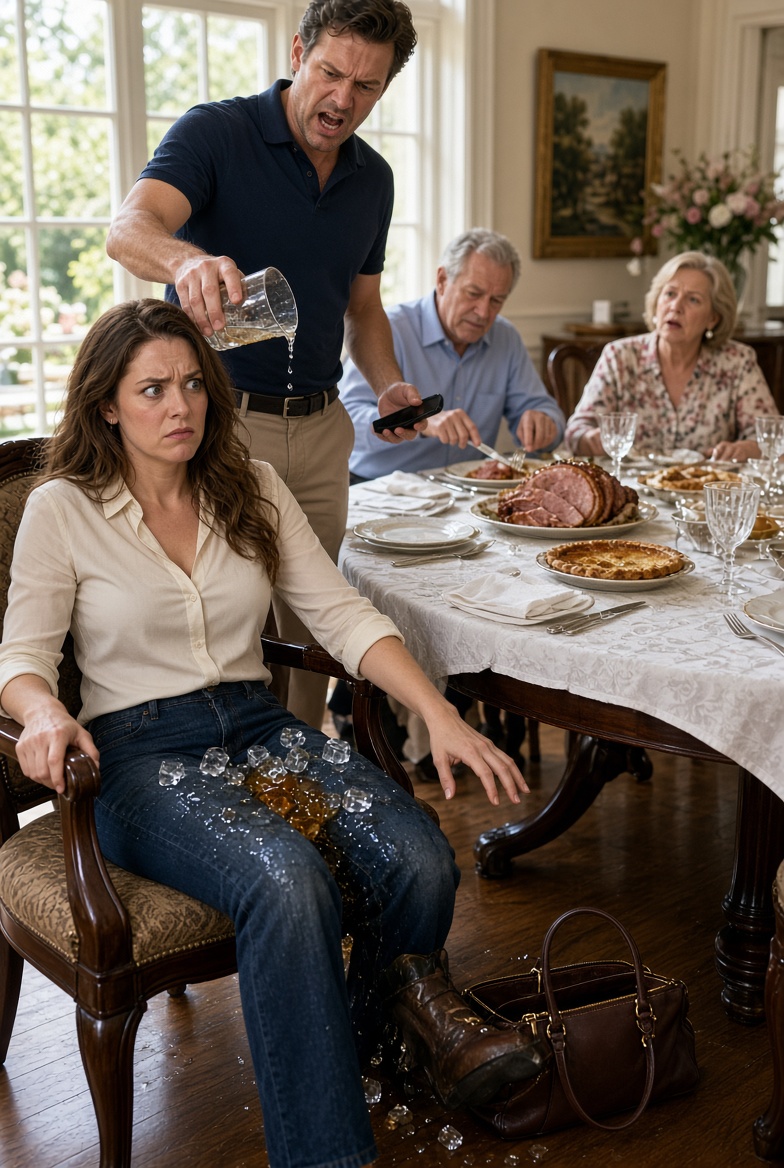
That envelope on the dining room sideboard on Mother’s Day was the trap snapping shut. We’ll talk after pie meant an ambush. They had orchestrated a theatrical production. The entire family gathered, a quality pen uncapped and ready, expecting the dutiful, compliant daughter to be overwhelmed by the holiday spirit and sign her financial life away.
In thirty-six years of existence, I had never once looked my father in the eye and told him no.
“Everybody’s idea,” Julian had claimed. But I had never, not once, been considered a part of their ‘everybody.’
My phone vibrated violently against the dashboard before I had even cleared the Oakhaven town limits that morning. The caller ID flashed a photo of Arthur from Easter Sunday. I answered on speakerphone, keeping my knuckles white on the steering wheel.
“Elara,” the elder’s voice boomed. It was the calm, dangerously patient tone he reserved for reprimanding teenagers caught vaping behind the fellowship hall. “Whatever that abomination is planted in our front yard, you will return here and dismantle it before the neighbors awaken.”
“No.”
The single syllable hung in the cramped cabin of my car, heavy and absolute.
Through the speaker, I heard a cabinet door slam. Evelyn’s muffled voice drifted from the background. What did she say? And beneath that, the distinct, nasal sound of Julian laughing.
Arthur didn’t respond to me. He spoke to his wife. “She’ll have it ripped out by Sunday.”
Then, the line went dead. He always severed the connection first. It was his ultimate power play, ensuring he always had the final word.
I kept driving, the metallic taste of adrenaline flooding my mouth. I had finally said no.
In my rearview mirror, the suburban street was slowly stirring to life. Porch lights flickered off; a garage door rumbled open. Every single resident on that block would witness the real estate sign before they poured their first cup of coffee. And the irony was, half of those neighbors had watched a very different sign go up in that exact same yard over a decade ago.
The first sign had been hammered into the earth during the spring I turned twenty-two. It hadn’t belonged to a realtor; it belonged to a predatory bank.
That house had been my sanctuary since infancy. But the bank seized it, auctioned it off to the highest bidder, and for nine long years, an entirely different family hung their seasonal wreaths on our front door.
Five years ago, by a stroke of pure cosmic luck, the property resurfaced on the market. Martha had called me before the listing went public. I toured the vacant rooms, tracing my fingers over the familiar dents in the drywall, trying not to weep.
I purchased it using every single dollar I had aggressively hoarded since graduating college, securing a mortgage entirely in my own name. On moving day, I stood on the porch and placed the brass keys directly into Arthur’s palm. They were still radiating heat from my pocket.
His fingers closed around the metal. He did not say thank you.
The following Sunday, when the head pastor asked the congregation for praises and testimonies, my father stood tall in the middle pew. “The Lord, in His infinite grace, has returned my house to me,” he declared.
The organist immediately transitioned into a rousing rendition of Great Is Thy Faithfulness. Women dabbed their eyes with tissues. Men clapped him on the shoulder. I sat silently in the pew and allowed them to believe the narrative.
Only once had I dared to question it. I asked my mother why Dad couldn’t simply tell the community the factual truth of how the house was acquired. We were in the kitchen, unwrapping her fine china from old newspapers.
Evelyn didn’t even pause her work. “Your father lost his kingdom once because of you, Elara. The least you can do is let him have his pride.”
Because of me.
My mother kept a meticulously curated ledger of my debts, housed in a thick, white three-ring binder.
On the day the bank originally evicted us, the church had loaned us a box truck. I was twenty-two, a month away from earning my degree, hauling heavy cardboard boxes down the very steps I would one day pay hundreds of thousands of dollars to walk back up. Julian, who was twenty at the time, was conveniently absent. Arthur claimed he was “helping a buddy.”
Evelyn had cornered me in the echoing, empty dining room. She was clutching the white binder to her chest like a sacred text. On the spine, written in her elegant, sweeping cursive, were two words: Elara – Hospital.
She shoved the heavy binder into my exhausted arms. “This is exactly what your life cost us,” she whispered, her voice devoid of affection. “I need you to carry the weight of this understanding.”
I numbly opened the plastic cover. The very first page was a comprehensive hospital billing summary. At the bottom, printed in aggressive bold ink: TOTAL CHARGES: $412,000.
Arthur suddenly appeared in the doorway, a brass lamp tucked under his arm. “Do you want to tally up exactly what you bled from us? Go ahead. Count it.”
I slammed the cover shut. “I am so sorry,” I choked out.
From that agonizing day forward, opening that binder would equate to haggling over the financial value of my own survival. The cancer had eaten my cells, but the cost of curing it had eaten my family’s soul. Nobody in my bloodline would ever forgive me for bankrupting them.
Or so I was told.
Now, fourteen years later, the sign was back in the yard. And as I parked my car at my apartment complex, my phone buzzed with an incoming text. It was Julian.
You stripped this family of our home once because of your sickness. You do not get to steal it twice.
I read the glowing pixels. He genuinely believed it. He was clinging to the narrative he’d been spoon-fed at twenty, never once possessing the intellectual curiosity to inspect the foundation of the lie.
I locked my phone, refusing to engage. But the text was merely the opening salvo. By the time I arrived at my office desk, the true psychological warfare had begun.
Cliffhanger: The prayer chain email was about to turn the entire town against me, branding me a monster.