
Chapter 6: The Scales of Retribution
Seven years later.
The high-arched limestone corridors of the Robert F. Kennedy Department of Justice Building in Washington, D.C., were cool despite the sweltering July heat radiating off the National Mall outside.
I walked down the fifth-floor corridor, the sharp, authoritative click of my heels against the terrazzo tile echoing off the vaulted ceilings. I wore a tailored charcoal-gray wool suit, my hair pulled back into a severe, professional knot. Beneath the crisp silk of my cream blouse, the silver scars on my back were entirely hidden—no longer open wounds, but a permanent suit of armor woven directly into my flesh.
In my right hand, I carried a heavy, monogrammed leather trial briefcase bearing the seal of an Assistant United States Attorney.
At twenty-eight years old, I had spent the last three years serving as a lead trial attorney in the Public Integrity Section—the elite, specialized division within the Criminal Division tasked with hunting down corrupt judges, compromised federal law enforcement officials, and dirty politicians who weaponized public trust for personal cruelty.
I pushed open the heavy brass-handled doors of Courtroom 4B.
Inside, the defense table was occupied by Senator David Vance-Miller—no relation to my father, though he had spent twenty years pretending he carried the honor of a statesman. Beside him sat four white-shoe defense attorneys whose hourly rates exceeded the average American’s monthly income. They had spent seven weeks trying to bury a paper trail of foreign kickbacks and judicial tampering beneath fifty thousand pages of procedural motions.
They had failed.
The jury filed in, their faces solemn, their gazes refusing to meet the eyes of the defense.
“Madam Foreperson,” the federal judge intoned from the bench. “Has the jury reached a verdict?”
“We have, Your Honor.”
I stood at the prosecution table, my spine straight, my hands resting lightly upon the polished oak surface. I didn’t fidget. I didn’t look away.
“On Count One, Conspiracy to Defraud the United States: Guilty. On Count Two, Honest Services Wire Fraud: Guilty. On Counts Three through Twelve, Bribery of a Judicial Officer: Guilty.”
Across the aisle, the Senator slumped into his leather chair, the blood draining from his face, looking suddenly frail, small, and utterly broken. His high-priced lawyers frantically scribbled meaningless notes, their arrogance vaporized by the unyielding weight of the federal code.
I felt no wild surge of triumph. No petty celebration. Only the quiet, profound satisfaction of a craftsman who had built a cage precisely to the dimensions of the monster it was designed to hold.
An hour later, having completed the post-verdict press conference on the courthouse steps without smiling for a single camera, I walked out through the soaring marble rotunda of the Department of Justice’s grand entrance.
Standing near the heavy brass security turnstiles, dressed in an impeccably tailored dark civilian suit, his posture as imposing and unyielding as a mountain ridge, was my father.
His hair was entirely silver now, the lines around his slate-blue eyes carved a little deeper by the passage of years. But his presence still commanded the room; two Capitol Police officers nodded to him with instinctive, respectful deference as they passed.
When he saw me approach, the stern, battle-hardened lines of his face softened into an expression of quiet, absolute pride.
“A clean sweep, Counselor,” Victor said, his deep voice carrying a rare, warm smile as he reached out, pulling me into a brief, powerful embrace that smelled of cedar, crisp linen, and home.
“Twelve for twelve, Dad,” I replied, stepping back, looking up into the eyes of the man who had brought a war machine to save me from a garden shed.
“How does it feel?” he asked quietly, walking beside me as we pushed through the heavy revolving doors into the brilliant, golden afternoon sunlight of Constitution Avenue.
I looked out across the city—at the towering dome of the Capitol, the gleaming monuments of white marble, and the thousands of people moving through the streets below.
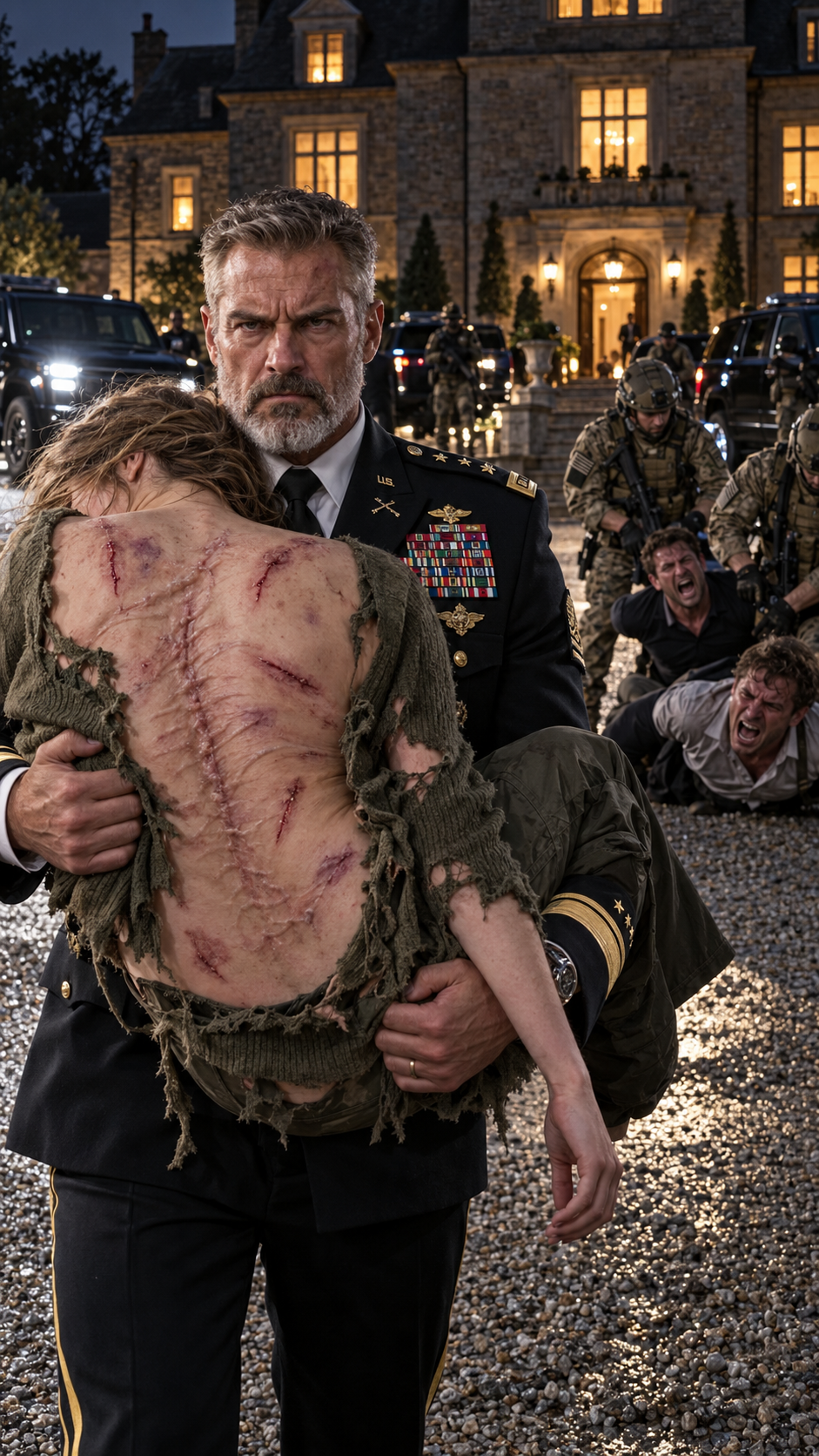
I thought of the terrified eighteen-year-old girl curled in the dirt, bleeding into the oil of a cold concrete floor, waiting for the darkness to swallow her whole. I thought of Arthur Sterling’s arrogant proclamation that the law belonged to him.
Men like Arthur, men like Julian, and men like the corrupt politicians I sent to federal prisons every month operate under a fatal misunderstanding of the universe. They believe that power is derived from the title on their door, the silk of their robes, or their ability to inflict suffering upon those who cannot fight back. They believe that cruelty is strength.
They never understand that true power does not lie in the ability to break another human being.
True power is the unshakeable fury of a father who will tear the sky apart to protect his child. And true power is the survivor who takes the broken pieces of the life they were given, walks through the fire, and returns as the architect of retribution.
“It feels like order, Dad,” I said, slipping my arm through his as we walked down the stone steps together. “It feels like justice.”
If you want more stories like this, or if you’d like to share your thoughts about what you would have done in my situation, I’d love to hear from you. Your perspective helps these stories reach more people, so don’t be shy about commenting or sharing.