
Chapter 3: The Gathering Tempest
Inside the heated, wood-paneled splendor of the manor’s master study, Arthur Sterling poured himself three fingers of twenty-five-year-old single malt scotch.
He did not swirl the glass. He drank it in two long, burning swallows, allowing the warmth of the peat and alcohol to steady his heart rate. His silk robe was neatly retied. The braided leather belt lay rolled neatly on the corner of his leather-topped desk, beside his gold Montblanc fountain pen and the framed photograph of himself shaking hands with the Governor.
Julian sat on the button-tufted Chesterfield sofa, a cold compress held tightly against the bridge of his nose. The bleeding had ceased, but deep purple bruising was already spreading beneath both of his eyes like ink through water.
“She needs to be committed, Dad,” Julian said, his voice nasal and thick. “She’s unstable. You saw how she looked at me. If you just send her to a private facility in North Carolina, no one will ever ask questions. Evelyn won’t say a word.”
Arthur walked to the expansive bay window, looking out over the manicured lawn toward the dark silhouette of the brick pump house at the tree line.
“Evelyn will sign whatever document I place before her,” Arthur said coldly. “She understands the mechanics of her lifestyle. But Maya has always harbored the blood of that soldier. She possesses his stubborn, insolent refusal to acknowledge superior authority. A year in a state-contracted secure reform center will dismantle that arrogance.”
Arthur turned back toward the desk. He felt completely in control. He had broken governors; he had rewritten state statutes to protect his corporate donors; he had crushed class-action suits brought by thousands of working-class families without losing an hour of sleep. A teenage girl and her disgraced, exiled biological father were less than insects against the fortress of his influence.
He picked up the crystal decanter to pour another measure.
Three miles away, skimming fifty feet above the dark tree canopy of the Shenandoah Valley, two matte-black MH-6 Little Bird light utility helicopters cut through the night like silent, airborne predators.
They flew with running lights off, their specialized low-noise five-blade main rotors producing only a muffled, rhythmic thrum that blended seamlessly into the autumn wind. They did not appear on civilian flight radars; their transponders were squawking classified Department of Defense priority codes that overrode FAA regional control towers.
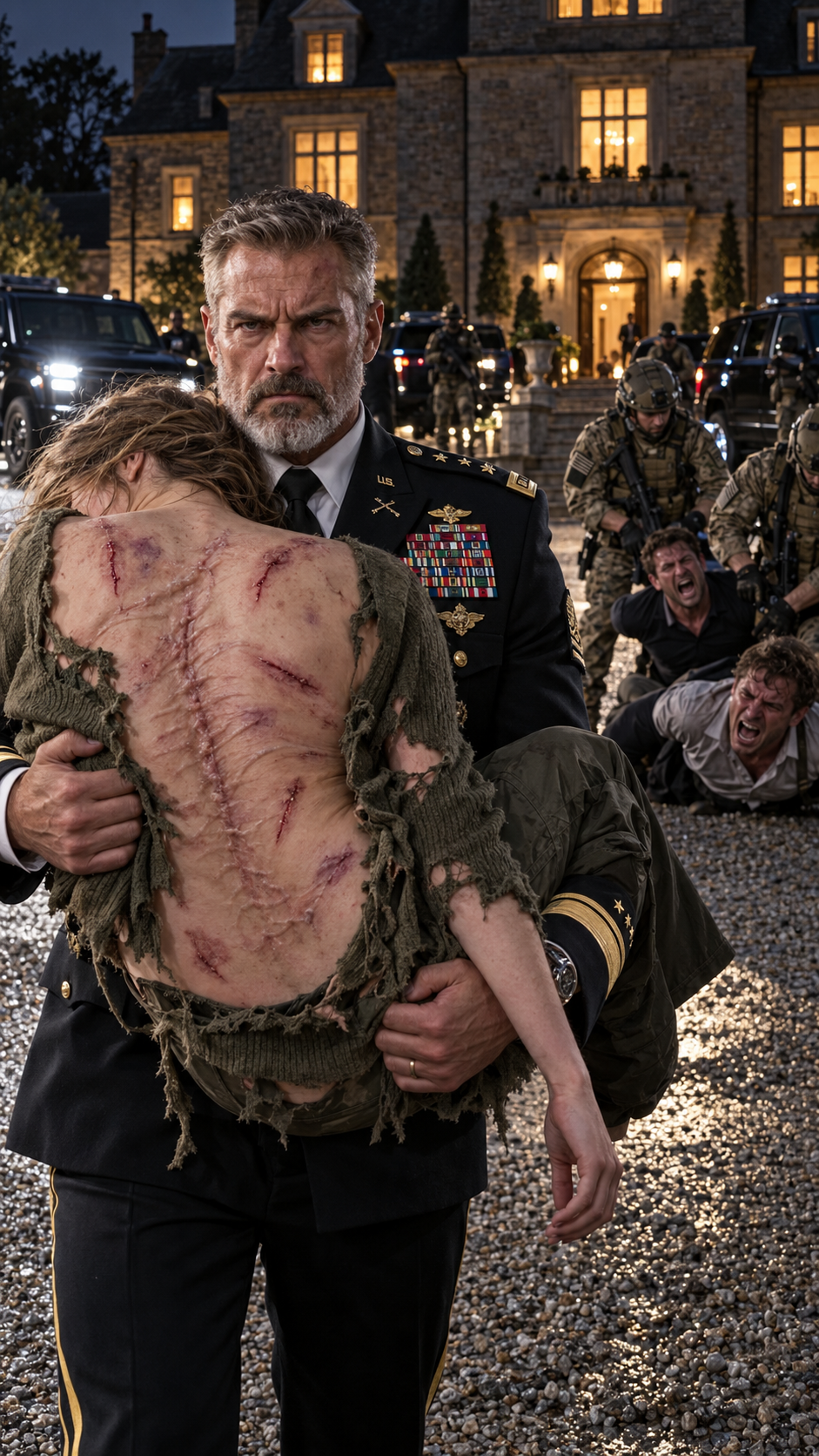
Inside the lead helicopter, perched on the edge of the open troop bench, sat General Victor Vance.
He wore sterile, unmarked charcoal-gray tactical gear beneath a heavy plate carrier, his weathered, chiseled face illuminated only by the faint green phosphor of the cockpit’s heads-up display. His steel-gray hair was cut brutally short; his jaw was a slab of granite.
He was fifty-one years old. Three months ago, he had stepped down from his role as the Deputy Commander of the United States Special Operations Command. A thirty-year veteran of every black-budget theater from the mountains of the Hindu Kush to clandestine maritime interdictions in the South China Sea, Victor Vance was a man who did not operate within the delicate, polite fiction of civil jurisprudence.
When Arthur Sterling had used a web of fabricated affidavits, bought family-court judges, and manufactured state injunctions to bar Victor from entering the state under threat of immediate arrest, Victor had not filed an appeal.
He had gathered intelligence. He had built a dossier that went three layers deeper than the state attorney general’s wildest nightmares. And he had waited for the single call he prayed would never come.
Now, strapped across his broad chest was a customized short-barreled tactical rifle. In his right hand, he held a ruggedized tactical tablet displaying a real-time thermal overlay of the Sterling Estate. A blinking red beacon marked the location of the burner phone inside the detached brick shed.
Beside him sat six operators from an elite, off-the-books special mission unit—men who had served under his command for a decade, men whose records did not officially exist in open Pentagon databases. They sat in absolute, disciplined silence, their night-vision goggles flipped down, their gloved hands resting on suppressed weapons.
“One minute to target, General,” the pilot’s voice crackled through the secure bone-conduction comms headset. “Airborne jamming suite EA-18G Growler overhead has initiated wide-spectrum localized suppression. Cellular towers, civilian radio frequencies, and local emergency dispatch repeaters within an eight-mile radius are dark. The target house is completely isolated.”
Victor’s thumb traced the cracked screen of his own handheld monitor, staring at the telemetry of Maya’s brief distress call. He had heard her voice. He had heard the wet, choking gasp of his daughter crying for her life.
His voice, when he spoke over the tactical network, was stripped of all human emotion. It was the voice of an executioner reading a final verdict.
“Take down the grid,” Victor said. “Breach the perimeter. Anyone who raises a weapon is neutralized with extreme prejudice. Sterling is mine.”
“Copy, actual. Execute.”
Inside the study, Arthur Sterling raised his glass to his lips.
The lights went out.
It was not a gradual dimming. The chandeliers, the sconces, the outdoor security floodlights, the digital clocks, and the hum of the HVAC system were instantly, violently extinguished. The estate was swallowed by absolute, suffocating darkness.
Arthur froze, the crystal glass halfway to his mouth. “What is that? Julian, did the breaker trip?”
“I… I don’t know,” Julian stammered, standing up in the dark, his voice shaking. “The emergency backup generator should have kicked on automatically.”
From outside, the windows began to rattle.
It started as a low, sub-audible vibration that rattled the crystal decanters on the sideboard. Within three seconds, it grew into a deafening, violent downdraft that whipped the heavy oak branches against the slate roof.
Arthur set his glass down, his heart suddenly hammering against his ribs in an unfamiliar, cold spasm of instinctual dread. He walked quickly to the desk, pulled open the center drawer, and reached for the silver-plated .38 revolver he kept loaded for home defense.
Before his fingers could wrap around the walnut grip, the front double doors of the mansion—solid, four-inch-thick reinforced white oak—imploded.
BOOM.
A linear shaped-charge blast blew the heavy iron hinges completely out of their limestone moorings. The concussive shockwave blew the inner French doors of the study inward, showering the room in a blizzard of pulverized glass and splintered wood.
The roar of the blast was immediately followed by the blinding, four-thousand-lumen flash of tactical strobes and the rhythmic, terrifying thunder of heavy combat boots sprinting across marble.
CONTINUE READ NEXT PART… 👇