
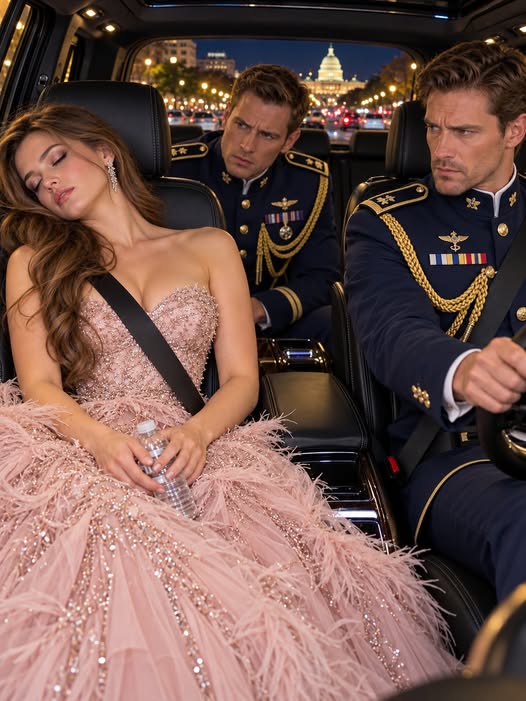
Whenever my brother-in-law gave me a ride home, I would lose consciousness and wake up with pain I couldn’t explain.
My husband always laughed it off.
“You’re just out of shape.
That’s all.”
After the fourth time, I secretly placed a voice recorder inside my purse and said nothing.
That night, I captured a phone conversation between the two brothers that made one thing terrifyingly clear: none of my blackouts had been accidental.
“She’s completely unconscious.
Bring her over, but make sure you don’t leave any marks on her this time.”
Hearing those words in my husband’s voice on the hidden recording broke something inside me that could never be repaired.
That evening, I regained consciousness in the passenger seat of my brother-in-law’s SUV.
The vehicle was sitting in the underground parking garage of our high-rise condominium in Southlake, Texas.
The dashboard clock read 11:08 p.m. I’d left my downtown Dallas office at 9:40 p.m. Under normal circumstances, the drive home took less than half an hour.
A dull pain pulsed through my neck.
Every slight movement sent a sharp ache through my lower back, and I noticed a tear in my tights near one knee.
But something else disturbed me even more.
The passenger seat had been tilted back much farther than I would ever have adjusted it myself.
Marcus, my brother-in-law, was gone.
For several seconds, I remained motionless, trying to understand what had happened.
It was the fourth time I’d experienced something like this.
The pattern was always identical.
My husband, Julian, would tell me he had a late client dinner or some corporate function to attend.
Then he’d arrange for his brother to collect me from work.
Marcus would arrive with a bottle of water that had already been opened.
“Here you go, Sofia.
Have some water.
You look absolutely worn out.”
And I would accept it.
Not long afterward, everything would go blank.
The next thing I knew, hours had passed, and I’d wake up feeling sluggish, sore, and bruised.
Whenever I brought it up with Julian, he treated my concerns like a joke.
“Sofia, you’re bent over accounting spreadsheets ten hours a day.
Of course your body hurts.
You’re out of shape.
You should start going to the gym.”
For a while, his explanation had seemed believable.
But after the third incident, I couldn’t ignore the uneasy feeling growing inside me.
I purchased a miniature digital voice recorder and concealed it in a zippered compartment deep inside my handbag.
I didn’t tell anyone.
And on that fourth night, I finally worked up the nerve to play what it had captured.
At the beginning of the recording, I heard myself thanking Marcus for the bottle of water.
For roughly ten minutes afterward, there was nothing but silence.
Then Marcus placed a call using the SUV’s Bluetooth system.
“She passed out again,” he announced.
The voice that answered belonged to Julian.
My own husband.
The man who climbed into bed beside me every night.
“Perfect.
Bring her over.
Vanessa’s already here.
And don’t screw this up.
No marks on her this time, understand?
You left some last time.”
Marcus gave an uneasy little laugh.
“It was hardly even a bruise.”
“One bruise is all it takes to get us in trouble.
Just follow my instructions.”
The call ended.
About a minute later, I heard the SUV come to a stop.
There was a click as my seatbelt was unfastened.
Then came the quiet mechanical whir of the electric seat adjusting, lowering my body farther backward.
Marcus spoke again, this time almost to himself.
“You trust us far too easily, sister-in-law.”
A moment later, I heard the unmistakable sound of his hand brushing against my clothing.
I immediately stopped the recording.
I couldn’t bear to hear anything else.
I rushed into the master bathroom and turned the lock behind me.
Facing the mirror above the sink, I carefully lowered the neckline of my blouse.
Just beneath my collarbone was a dark purple bruise.
For days, I’d convinced myself it must have come from accidentally bumping into something, even though I couldn’t remember when or how it had happened.
Now I knew I had been wrong.
And then a far more frightening thought occurred to me.
Julian hadn’t simply known about what was happening.
He might have been the one arranging it all along.
But there was one detail I couldn’t get out of my mind.
One sentence that kept repeating itself.
“Vanessa’s already here.”
Who the hell was Vanessa?
I stared at my reflection, my fingers gripping the edge of the bathroom sink so tightly that my knuckles turned white.
Vanessa.
I knew only one woman by that name.
Vanessa Caldwell.
She was Julian’s former girlfriend.
Or at least, that was what he’d always called her.
According to Julian, they’d dated briefly during college and remained friendly afterward.
She had attended our wedding, sent flowers when my mother died, and occasionally joined us for dinner.
She was also the woman who had recommended the private wellness clinic where I’d received treatment for unexplained fatigue six months earlier.
A sudden chill traveled down my spine.
Six months.
That was when the strange exhaustion had begun.
I reached for my phone.
Then stopped.
Julian could see my location.
We shared a family tracking application, and he knew the passwords to several of my accounts.
For the first time in seven years of marriage, I understood that the things I’d considered signs of trust might actually have made it easier for him to control me.
I looked at the bathroom door.
Beyond it, the apartment was silent.
Julian wasn’t home yet.
He had texted me earlier, saying his dinner would run late.
I opened the recording again.
This time, I forced myself to listen beyond the point where I’d stopped.
There were footsteps.
A car door opening.
Then Marcus’s voice.
“Careful.
She’s heavier than she looks.”
Another voice answered.
A woman’s.
“Just get her inside.
Julian said we don’t have much time.”
Vanessa.
I recognized that smooth, carefully controlled voice immediately.
There was a scraping sound, followed by the closing of a door.
For several minutes, the recorder picked up muffled conversations and footsteps.
Then Vanessa spoke again.
“Did you bring the paperwork?”
Marcus answered, “It’s in the glove compartment.”
“And the photographs?”
“Julian has them.”
I felt my stomach twist.
Photographs?
What photographs?
Vanessa sighed.
“He’s getting impatient.
If Sofia doesn’t sign voluntarily, we’re going to need another way.”
Marcus laughed.
“She’ll sign.
Julian knows exactly how to handle her.”
The recording continued.
I heard a door open, water running, and then Julian’s voice.
He had been there.
Not at a corporate dinner.
Not meeting clients.
With them.
“Make sure everything looks normal when she wakes up,” he said.
“We can’t afford another mistake.”
Vanessa replied, “Then stop letting your brother improvise.”
A chair scraped across the floor.
Julian lowered his voice.
“After Friday, none of this will matter.”
Friday.
That was three days away.
I listened until the recording ended.
Then I lowered the phone onto the counter.
I had spent seven years believing I was married to a man who loved me.
Now I had evidence that he had participated in repeatedly rendering me unconscious.
And apparently, they were planning something even worse.
I wanted to scream.
I wanted to run into our bedroom, throw every photograph of our wedding against the walls, and confront Julian the moment he walked through the door.
But I remembered something my father used to tell me.
My father had been a criminal defense attorney for thirty-four years.
He’d always said that when someone betrayed you, anger could make you reckless.
Evidence, however, could make the truth impossible to bury.
I needed evidence.
And I needed to get somewhere safe.
I took photographs of the bruise beneath my collarbone, the tear in my tights, and the small red mark I’d discovered near my wrist.
Then I emailed copies to an account Julian didn’t know existed.
I also uploaded the recording.
At 11:36 p.m., I sent a message to my closest friend, Rachel Bennett.
Rachel was an emergency room physician at Baylor University Medical Center in Dallas.
She had been my friend since college.
I wrote only four words.
“Rachel.
I need help.”
Her response arrived almost immediately.
“Where are you?”
“Home.
Please call me.”
My phone rang less than ten seconds later.
“Sofia?
What’s wrong?”
I tried to speak.
Nothing came out.
“Sofia?”
“I think Julian has been drugging me.”
Silence.
Then her voice changed.
“Tell me exactly what happened.”
I explained as much as I could.
When I mentioned the recording, Rachel interrupted.
“Listen carefully.
Don’t confront him.
Don’t drink anything in that apartment, and don’t let either of them know what you found.”
“I don’t know where to go.”
“Come to the hospital.
I’ll meet you there.”
I hesitated.
“What if he comes home?”
“Then leave before he does.”
I packed a small bag with my identification, wallet, medication, and a change of clothes.
I took my laptop and the original voice recorder.
Then I left my wedding ring on the bathroom counter.
For a moment, I stared at it.
Seven years.
Seven years of birthdays, holidays, anniversaries, and promises.
I had believed all of it.
I turned away.
At 11:52 p.m., I walked out of my marriage without saying goodbye.
Rachel met me outside the emergency department.
She didn’t ask any questions when she saw my face.
She simply wrapped her arms around me.
And that was when I finally broke.
I cried so hard that I could barely breathe.
Rachel held me until I could stand again.
Then she brought me inside.
A physician who wasn’t personally involved in my care performed the examination.
Rachel stayed nearby because I asked her to.
They documented my bruises, collected blood and urine samples, and discussed the possibility of drug-facilitated assault.
The doctor explained that certain substances could disappear from the body quickly, which made immediate testing important.
When he asked whether I wanted a forensic examination, I nearly said no.
The thought was unbearable.
But I remembered the recording.
“Don’t leave any marks on her this time.”
I nodded.
“Yes.”
The examination was conducted carefully, with my consent at every stage.
A nurse explained each procedure before beginning.
Nobody rushed me.
Nobody laughed at my confusion.
Nobody told me I was imagining things.
That simple kindness nearly destroyed me all over again.
At 2:14 a.m., a detective arrived.
Her name was Detective Allison Reed.
She had worked with the Dallas-area regional task force investigating violent and financial crimes involving vulnerable adults.
She listened without interrupting as I described the four incidents.
Then I played the recording.
When Julian’s voice came through the speaker, her expression hardened.
She asked to preserve a copy and took down the details necessary to establish where the original had come from.
“Do you recognize the voices?”
she asked.
“All three of them.”
“Your husband, his brother, and Vanessa Caldwell?”
“Yes.”
“Do you know where they took you?”
“No.”
“Do you know what they were doing while you were unconscious?”
I looked down.
“I don’t know.”
She waited.
Then I whispered the question that had been haunting me.
“Was I assaulted?”
Detective Reed leaned forward.
“Sofia, we don’t have enough information to tell you exactly what happened.
But we are taking what you’ve reported seriously.
You did the right thing by coming here.”
I pressed my hands together to stop them shaking.
“There’s something else.”
I told her about Friday.
About the photographs.
About the paperwork.
And about the wellness clinic Vanessa had recommended.
At the mention of the clinic’s name, the detective paused.
“Evergreen Wellness?”
I nodded.
“Yes.”
She exchanged a look with the officer standing near the door.
It was brief.
But I noticed.
“What?”
Detective Reed chose her words carefully.
“We’ve received a separate complaint involving someone associated with that business.”
My heart began pounding.
“What kind of complaint?”
“I can’t discuss another person’s case.
But this gives us something specific to investigate.”
For the first time that night, I felt something besides fear.
Maybe I wasn’t the only one.
By morning, Julian had called me seventeen times.
His messages began with concern.
“Baby, where are you?”
Then confusion.
“Marcus said you got home safely.”
Then irritation.
“Sofia, this isn’t funny.”
Finally, at 6:43 a.m., he wrote:
“Whatever you think happened, we can explain.”
I stared at the screen.
Whatever you think happened.
He hadn’t asked what was wrong.
He already knew.
Detective Reed told me not to engage with him until we’d discussed a safety plan.
Rachel helped me arrange a temporary place to stay somewhere Julian couldn’t easily find me.
I turned off location sharing, changed passwords from a clean device, and contacted an attorney recommended by my father’s former law partner.
Her name was Natalie Brooks.
She specialized in family law and cases involving coercive control and financial abuse.
By early afternoon, Natalie was sitting across from me in a private conference room.
She listened to the recording twice.
Then she asked a question that seemed completely unrelated.
“Sofia, what assets did you own before marrying Julian?”
I blinked.
“My grandmother left me some money.”
“How much?”
“About eight hundred thousand dollars.”
“Was it held separately?”
“Yes.
My father arranged the trust.”
Natalie leaned back.
“Did Julian ever ask you to transfer any of it?”
I thought for a moment.
“He wanted me to invest in a commercial development last year.”
“Did you?”
“No.
My accountant advised against it.”
“How did Julian react?”
“He was furious.”
Natalie made a note.
“Anything else?”
I remembered something.
Three weeks earlier, Julian had brought home documents from his attorney.
He’d described them as ordinary estate-planning updates.
He wanted me to sign powers of attorney and authorize him to manage certain financial accounts if I became medically incapacitated.
I’d refused to sign without having someone review them.
He’d called me paranoid.
Then he’d apologized.
Two days later, Marcus had started driving me home.
I looked at Natalie.
“Oh, God.”
She reached across the table.
“What is it?”
I explained.
Her expression grew serious.
“Sofia, do you still have those documents?”
“They’re in my desk at home.”
“Then we need to find out exactly what they say.”
That afternoon, Natalie obtained copies from the law firm that had prepared them, relying on my status as the named client.
When she called me back, her voice was grim.
“Sofia, these aren’t standard estate-planning documents.”
“What do you mean?”
“One of them would authorize Julian to conduct extensive transactions involving your separate investment accounts.
Another contains language that could give him substantial control over your financial affairs if certain conditions were met.”
I felt dizzy.
“He said they were just for emergencies.”
“That’s not the whole story.”
She paused.
“And there’s a draft transaction agreement attached.”
“What transaction?”
“A proposed investment into a company called Caldwell Strategic Holdings.”
Caldwell.
Vanessa Caldwell.
“That’s Vanessa’s company,” I whispered.
“According to the paperwork, yes.”
“How much?”
“Seven hundred and fifty thousand dollars.”
Nearly the entire amount I’d inherited.
I closed my eyes.
Julian hadn’t merely wanted control of our marriage.
He wanted my money.
And when I wouldn’t hand it over willingly, he’d apparently decided to make me incapable of refusing.
But the photographs still didn’t make sense.
Neither did the bruises.
And I couldn’t shake the feeling that there was another layer to what they’d done.
Two days later, Detective Reed called.
“Can you come in?”
Her tone told me something had changed.
I arrived at the police station with Natalie.
The detective led us into a conference room where several files were spread across a table.
“We identified the location your brother-in-law visited on the nights you reported losing consciousness,” she said.
“How?”
“Traffic-camera records, toll information, and surveillance footage obtained during the investigation.”
She slid a photograph toward me.
It showed a large house behind iron gates.
A beautiful property surrounded by oak trees.
I recognized it immediately.
“That’s Vanessa’s house.”
Detective Reed nodded.
“The SUV was recorded entering that property on all four nights.”
My throat tightened.
“Was Julian there?”
“On at least three of those evenings, surveillance evidence places his vehicle at the residence.”
She showed me another image.
Julian’s black Mercedes.
Parked beside Marcus’s SUV.
I couldn’t stop staring.
There was no corporate dinner.
There had never been a corporate dinner.
The detective continued.
“We also identified a former employee of Caldwell Strategic Holdings who may have information about the activity taking place at that property.”
“Who?”
“A woman named Lauren Pierce.”
Lauren had worked as Vanessa’s administrative assistant.
She had recently resigned after what her lawyer described as a dispute over illegal activities.
For weeks, she’d been terrified to speak.
But when investigators contacted her about my case, she agreed to provide information.
What she told them was worse than I could have imagined.
Vanessa had been arranging supposedly private wellness consultations at her home.
She had access to sedating medications through an acquaintance who worked in a medical supply business.
The meetings weren’t legitimate medical appointments.
They were designed to create evidence that certain clients were mentally unstable, financially irresponsible, or incapable of making decisions.
In some cases, photographs and carefully edited recordings were used to pressure victims into signing financial documents.
Other material was kept as leverage.
I felt sick.
“Are you saying they were making me look mentally ill?”
“That’s part of what the evidence suggests,” Detective Reed answered.
She opened another folder.
“Lauren also described occasions when people who appeared heavily sedated were photographed in compromising circumstances.”
I struggled to breathe.
“Did that happen to me?”
“We’re still working to establish the full extent of what occurred.
We’ve applied for warrants and are pursuing the records and devices that may answer that question.”
Natalie put a hand on my shoulder.
I barely felt it.
There was only one thought in my mind.
Julian had watched me struggle with exhaustion and unexplained injuries.
He had seen me cry because I thought something was wrong with my body.
And all that time, he knew.
He knew because he had helped cause it.
The following morning, the hospital contacted me.
The initial toxicology findings were consistent with recent exposure to a sedating substance that had not been prescribed to me.
Further testing and expert review would be necessary to establish precisely what I’d been given.
But the result supported what I’d reported.
I hadn’t simply fallen asleep.
Someone had interfered with my ability to remain conscious.
For the first time, the doubt Julian had planted in me began to loosen its grip.
I wasn’t imagining my symptoms.
I hadn’t been careless.
I hadn’t been weak.
And I wasn’t going to let him convince me otherwise again.
On Friday morning, the day Julian had mentioned in the recording, investigators executed search warrants at Vanessa’s property and at the offices associated with Caldwell Strategic Holdings.
I didn’t witness the searches.
Natalie insisted that I stay somewhere safe.
For six agonizing hours, I heard nothing.
Then Detective Reed called.
“Sofia, we recovered electronic devices, financial records, and documents relating to you.”
I sank onto the sofa.
“What kind of documents?”
“A draft statement describing you as incapable of managing your affairs.
It contains allegations of substance misuse and psychiatric instability.”
I stared at the wall.
“I’ve never had a substance abuse problem.”
“I understand.”
“Who wrote it?”
“We’re still establishing who prepared each part of it.”
Then she told me something that made my blood run cold.
The documents included a proposed schedule for placing me in a private treatment facility.
The admission was supposed to take place the following week.
Julian would present himself as a concerned husband seeking help for his supposedly deteriorating wife.
He had even drafted a letter for my employer, claiming I needed a medical leave of absence.
While I was away, he intended to take control of my finances.
And the investment into Vanessa’s company was supposed to follow.
I thought about how easily it could have worked.
Four mysterious blackouts.
Bruises I couldn’t explain.
A husband who repeatedly told me I was exhausted, unhealthy, and confused.
Photographs taken while I couldn’t defend myself.
A false medical narrative.
It had been a deliberate campaign to undermine my credibility.
But the next revelation struck even harder.
Detective Reed called again that evening.
“We recovered several images and videos involving you.
I want you to know that before we discuss anything further.”
I closed my eyes.
“Please tell me.”
She spoke slowly.
“The material appears to show you while you were unconscious or severely impaired.
Some of it was staged to create the impression that you were intoxicated or behaving erratically.
There are also recordings that raise concerns about inappropriate physical contact.”
My hands began trembling.
“Marcus?”
“He’s among the people visible in the material.”
“And Julian?”
There was a pause.
“Yes.”
I couldn’t speak.
Detective Reed continued gently.
“We won’t make you view anything you’re not ready to see.
Investigators are examining the material, and we’ll discuss what additional information can be established.”
I leaned forward, covering my mouth.
For weeks, I’d feared that something terrible had happened during those missing hours.
Now there was evidence that my fear had been justified.
I didn’t want revenge in that moment.
I wanted those hours back.
I wanted the feeling of safety I’d once had in my own home.
And I wanted to know how the man who’d promised to protect me could have watched me suffer.
When Natalie arrived, she found me sitting on the floor beside the sofa.
She didn’t tell me to be strong.
She didn’t tell me everything would work out.
She sat down next to me.
After a long silence, I whispered, “How could he do that to me?”
Natalie looked at me.
“I don’t have an answer that would make it understandable.”
I began crying again.
For once, I didn’t try to stop.
Over the following days, the investigation moved quickly, though not nearly as quickly as I wanted.
Marcus was arrested first.
He was stopped after investigators obtained evidence connecting him to the repeated transport of an incapacitated person and other alleged offenses.
Vanessa was taken into custody shortly afterward.
Julian was arrested after investigators developed additional evidence concerning his participation.
I didn’t see the arrests happen.
I learned about them through Detective Reed and later through the news.
The first photograph of Julian in handcuffs made me feel strangely empty.
He wasn’t wearing one of his expensive suits.
His hair wasn’t perfectly styled.
He didn’t look like the successful businessman who used to walk into charity dinners with his hand resting proudly on my waist.
He looked like a frightened man realizing that charm couldn’t solve every problem.
But his arrest wasn’t the end.
It was only the beginning.
Julian hired a team of attorneys.
Through his lawyer, he denied arranging any assault.
He claimed the recordings were misunderstood, the financial arrangements were legitimate, and he’d only been trying to help a wife experiencing serious health problems.
Then his attorneys challenged the admissibility of my recording.
They raised questions about consent, privacy, and whether the device had captured conversations that could lawfully be used in court.
For several sleepless nights, I worried that the most important evidence I’d found might be excluded.
But the case no longer depended entirely on my recorder.
Investigators had obtained independent surveillance footage, electronic communications, financial records, medication-related evidence, and witness statements.
And one of the most significant pieces of evidence came from a place Julian hadn’t considered.
Our own condominium building.
The underground garage had cameras near the elevators.
After investigators obtained the relevant footage, they found Marcus returning me to our building on the fourth night.
He wasn’t alone.
Julian appeared shortly afterward.
The video showed the two men assisting me from the SUV while I was barely responsive.
At one point, my knees buckled.
Julian caught me.
Then he looked directly at the security camera.
And smiled.
I watched that brief segment months later, with a victim advocate beside me.
It was the smile I knew.
The same smile he’d given our wedding photographer.
The same smile he’d used when meeting my father.
The same smile that once made me feel special.
Seeing it on that screen, while I stood unable to support my own weight, was the moment something changed.
I no longer wanted him to explain himself.
I wanted the truth established.
And I wanted to make certain he could never use me that way again.
During the investigation, Lauren Pierce agreed to testify about what she had personally witnessed while working for Vanessa.
She described meetings where Vanessa and Julian discussed making me appear unreliable.
She also identified a folder labeled with my initials that contained staged photographs, draft letters, and records of financial transactions.
Most importantly, she produced copies of messages she had saved before leaving the company.
One exchange was dated two days after my second blackout.
Vanessa had written:
“She’s asking questions.
This is becoming risky.”
Julian responded:
“Then we need to make her doubt herself before she starts talking to anyone.”
I read that sentence three times.
Make her doubt herself.
That was exactly what he’d done.
Every time I’d questioned the bruises.
Every time I’d mentioned the missing hours.
Every time I’d told him I was frightened.
He hadn’t needed to physically restrain me in our home.
He’d tried to make me distrust my own judgment.
And for a while, it had worked.
The discovery process in the criminal cases revealed another painful truth.
Julian’s business was deeply in debt.
He had concealed several failed investments and large personal guarantees.
The company he liked to describe as thriving was facing serious financial pressure.
My inherited trust represented money he couldn’t otherwise reach.
Vanessa had proposed the scheme after Julian told her about my refusal to invest.
Marcus had agreed to participate in exchange for payments and promises of a share of the proceeds.
Their messages showed planning, disagreements, and increasingly desperate attempts to control what I knew.
That didn’t explain every act of cruelty.
Nothing could.
But it explained why they had been so determined to silence me.
The photographs weren’t merely intended to embarrass me.
They were leverage.
Julian expected that if I resisted the transfer of my money, he could threaten to show them to my employer, my family, or a court.
He had been willing to destroy my reputation to protect his own finances.
And he’d used my body and my trust as tools to do it.
I filed for divorce.
Natalie helped me obtain protective orders and secure my financial accounts.
A forensic accountant reviewed the transactions Julian had made during our marriage.
Several suspicious transfers were identified and referred to investigators.
For the first time in years, I began understanding how much of my life Julian had quietly managed without my full knowledge.
He had discouraged me from maintaining separate accounts.
He’d suggested that friends like Rachel were too intrusive.
He’d insisted that he handle our insurance, household finances, and medical paperwork because I was supposedly too busy.
I had mistaken control for consideration.
But slowly, I began rebuilding the parts of my life I’d surrendered.
I reopened an account in my own name.
I changed my beneficiaries.
I returned to work on a reduced schedule.
And with the help of a therapist experienced in trauma, I began learning to live with the uncertainty surrounding those missing hours.
Some nights, I woke from dreams in which I was trapped in Marcus’s SUV.
Sometimes the smell of leather upholstery made my pulse race.
I couldn’t drink bottled water handed to me by someone else without remembering his voice.
Recovery wasn’t a straight line.
There were mornings when I felt almost normal.
And evenings when a sound or a familiar street made me feel as frightened as I had in that bathroom.
Rachel never pressured me to recover faster.
She called when she could.
Sometimes we talked.
Sometimes she simply sat beside me while I watched television.
One Sunday, she found me staring at the scar from a small injury I’d sustained during one of the incidents.
“Does it ever go away?”
I asked.
She considered the question.
“I think it changes,” she said.
“Not all at once.
But eventually, it doesn’t get to decide what every day looks like.”
I wanted to believe her.
So I kept going.
Nearly eleven months after the night I discovered the recording, Julian’s criminal case reached a decisive stage.
By then, prosecutors had completed an extensive review of the evidence.
Marcus had entered a plea agreement and agreed to testify truthfully about his own participation.
His account was supported by records recovered during the investigation.
He acknowledged giving me drinks containing sedating substances, transporting me while I was incapacitated, and assisting in the creation of staged photographs and recordings.
He also admitted participating in conduct that violated my bodily autonomy.
Hearing those facts described in a courtroom was devastating.
For so long, I’d wondered whether my fears were justified.
Now I understood how much I’d been denied the chance to know.
Marcus’s testimony implicated Julian in planning the financial scheme and arranging several of the incidents.
But I never viewed Marcus as someone who had simply followed his brother’s orders.
He had made his own decisions.
He had watched me accept those bottles of water.
He had heard me thank him.
And he’d participated anyway.
Vanessa eventually entered a separate plea agreement involving fraud-related offenses, unlawful conduct connected to the sedations, and her role in producing and retaining compromising material.
Her cooperation helped establish the financial motivation behind the conspiracy.
Julian, however, continued to deny responsibility.
His case proceeded to trial.
I testified on the fourth day.
The courtroom felt much smaller than I’d imagined.
Julian sat at the defense table.
For the first time since his arrest, I saw him in person.
He looked older.
There were shadows beneath his eyes.
When I entered, he turned toward me.
For one terrible second, I felt the familiar impulse to read his expression and adjust my behavior accordingly.
Then I remembered why I was there.
I took my seat.
The prosecutor asked about our marriage.
About Marcus’s rides home.
About the water.
About the missing hours and unexplained injuries.
Then she asked me to describe the night I listened to the recording.
My voice shook at first.
I told the jury about standing in our bathroom, staring at the bruise beneath my collarbone, and realizing that my husband knew exactly why it was there.
I told them how he’d laughed when I asked for help.
How he’d convinced me that I was simply unhealthy.
How I’d begun questioning my own mind.
Then the prosecutor asked:
“Mrs. Sofia, why didn’t you confront your husband immediately?”
I looked toward Julian.
He was watching me.
“Because I was afraid of him,” I answered.
The courtroom was silent.
“And because I finally understood that he knew how to make me helpless.”
Julian lowered his eyes.
His attorney questioned me about my memory.
He pointed out that I couldn’t describe every event that occurred during the periods when I was unconscious.
He suggested that my conclusions were influenced by fear and the advice of other people.
I didn’t pretend to remember what I couldn’t.
When he asked whether I personally saw Julian administer a sedative, I answered no.
When he asked whether I remembered every moment inside Vanessa’s house, I answered no.
Then he asked:
“So you cannot tell this jury everything that happened during those missing hours, can you?”
I looked directly at him.
“No.
That’s the point.
I was made unconscious.
The people responsible took away my ability to know what was happening to me.”
He paused.
I continued before he asked another question.
“But there are recordings.
There are messages.
There are photographs.
There are medical records.
And there are people who witnessed what happened.”
The judge reminded me to answer only the questions asked.
I nodded.
But the words were out.
And I meant every one of them.
Later, prosecutors introduced evidence showing Julian’s involvement in the financial plan, along with communications demonstrating his knowledge of the sedations and the staged material.
Witnesses explained the electronic records.
Medical experts testified about the toxicology findings and their limitations.
Investigators described the evidence recovered during the searches.
The prosecution did not ask the jury to rely on my suspicions alone.
They presented a chain of corroborating facts.
Julian’s defense challenged individual pieces of that chain.
But the overall picture had become difficult to ignore.
When the jury returned its verdict, I sat between Rachel and Natalie.
Julian was found guilty on multiple charges arising from the conspiracy, unlawful incapacitation, and associated financial offenses.
I heard the verdict.
I understood the words.
But I didn’t immediately feel anything.
Rachel squeezed my hand.
Natalie leaned toward me.
“It’s over,” she whispered.
I shook my head slightly.
“Not yet.”
The sentencing hearing came several weeks later.
By then, I had written a victim-impact statement.
I rewrote it at least twenty times.
At first, it was full of anger.
Then questions.
Then memories of the man I thought I’d married.
Eventually, I realized I didn’t need to explain every way Julian had hurt me.
I only needed to tell the truth about what he’d taken.
When the judge allowed me to speak, I stood slowly.
Julian looked up.
“Seven years ago,” I began, “I married a man I believed I could trust more than anyone in the world.”
My voice was steady.
“I believed he would protect me if something terrible happened.”
I looked down at the paper.
“But when something terrible happened, he was one of the people causing it.”
Julian shifted in his chair.
“I spent months believing there was something wrong with my health.
I apologized for being tired.
I felt ashamed of injuries I couldn’t explain.
I thanked people who were hurting me because I didn’t know what they were doing.”
I took a breath.
“The worst part wasn’t only what happened during those missing hours.
It was what happened afterward.”
I looked directly at him.
“You watched me suffer.
You knew why.
And you made me believe I was responsible.”
His face tightened.
For a moment, I wondered if he might finally show genuine remorse.
But I no longer needed that from him.
I turned toward the judge.
“I can’t recover those lost hours.
I can’t undo what happened.
But I can stand here today and say that I remember who I was before this, and I’m working to become someone who feels safe again.”
My hands were trembling.
I let them tremble.
“I ask the court to recognize the deliberate nature of what was done to me, and the lasting consequences of those decisions.”
Then I sat down.
Julian was sentenced to a substantial term of imprisonment.
The judge also imposed financial penalties and restitution obligations as permitted by the case.
Marcus and Vanessa received sentences reflecting their separate convictions and plea agreements.
The civil and financial proceedings continued afterward.
Eventually, the divorce was finalized.
The court addressed our marital assets, and my separate inheritance remained protected from Julian’s attempted transfer.
There were still legal expenses.
There were still medical bills.
And there were consequences that no judgment could completely repair.
But the money Julian had tried so desperately to take remained mine.
The first thing I did after the divorce was sell our condominium.
I couldn’t bear to return to the place where I’d listened to that recording.
Where I’d stared at my bruises in the mirror.
Where I’d left my wedding ring on the counter.
I bought a smaller house outside Dallas.
It had a little garden, a sunny kitchen, and a front porch where I could sit in the mornings with a cup of coffee.
Nothing about it was particularly grand.
That was exactly why I loved it.
I chose every piece of furniture myself.
I decided which friends could visit.
I kept my own passwords.
And when I needed to go somewhere, I drove.
The first time I made the trip from downtown Dallas to my new house after a late evening at work, I had to pull into a gas station halfway home.
My hands were shaking against the steering wheel.
The traffic lights blurred through my tears.
I remembered Marcus’s SUV.
His open bottle of water.
The feeling of disappearing into darkness.
For several minutes, I considered calling Rachel to come get me.
Instead, I called her just to talk.
She answered on the second ring.
“Hey.
Everything okay?”
“I’m scared.”
“Where are you?”
“At a gas station.”
“Do you want me to come?”
I looked out through the windshield.
Cars moved along the highway.
Ordinary people were going home.
Some were probably tired.
Some were laughing.
Some were thinking about what to cook for dinner.
For them, the night was simply another night.
I wanted that again.
“Not yet,” I said.
Rachel stayed on the phone.
We talked about her upcoming vacation and a terrible movie we’d watched together in college.
Gradually, my breathing slowed.
When I felt ready, I started the car.
And I drove the rest of the way home.
By myself.
Several months later, I received a letter from Julian.
It had been forwarded through my attorney.
Natalie asked whether I wanted to read it.
I thought about it for a long time.
Then I said yes.
It was four pages long.
Julian wrote about the pressure he’d been under.
The financial mistakes he’d made.
The fear of losing his business.
He said Vanessa had encouraged him to make terrible decisions.
He said Marcus had gone further than he’d intended.
He insisted that he’d loved me.
Near the end, he wrote:
“I hope someday you can understand why everything got out of control.”
I read that sentence twice.
Then I folded the letter.
For years, Julian had wanted me to understand him.
His stress.
His ambitions.
His mistakes.
His temper.
His needs.
He’d expected me to make room for all of them.
But even now, after everything, he couldn’t offer a simple acknowledgment of what he’d deliberately done.
He wanted the story to be about circumstances that had overwhelmed him.
Not choices he had made.
I placed the letter in a folder with the other legal documents.
I didn’t write back.
There was nothing left to explain.
A year after the trial, Rachel and I attended a small charity dinner supporting survivors of domestic violence and coercive abuse.
I had started volunteering with an organization that helped people obtain emergency housing, legal referrals, and trauma-informed medical care.
I wasn’t ready to tell my entire story publicly.
Maybe I never would be.
But I could help someone find a safe place to sleep.
I could make a phone call.
I could sit beside a frightened woman while she waited for an attorney.
And sometimes, I could remind someone that not remembering every detail of a terrible experience didn’t mean she deserved to be disbelieved.
That evening, a young woman approached me after the event.
She looked nervous.
“Are you Sofia?”
I nodded.
“Someone told me you helped with the emergency housing program.”
“Yes.”
She twisted the strap of her purse.
“My sister’s going through something.
Her boyfriend keeps telling her she’s confused.
That she’s remembering things wrong.”
My chest tightened.
“I see.”
“She thinks maybe he’s right.”
I looked at the woman for a moment.
Then I pulled out a chair.
“Would you like to sit down?”
She nodded.
We talked for almost an hour.
I didn’t tell her what her sister should believe.
I didn’t promise that everything would turn out perfectly.
I explained what resources were available and how her sister could seek help safely.
When she finally left, she hugged me.
“Thank you for listening.”
I watched her disappear through the doors.
And for the first time, I understood something that had taken me a long time to accept.
Surviving what happened hadn’t made me invincible.
It hadn’t erased my fear.
It hadn’t returned the trust I’d once given so freely.
But it had taught me that my voice still belonged to me.
No one could take that away simply by making me doubt myself.
That night, I drove home beneath a clear Texas sky.
The highway was quiet.
I pulled into my driveway, turned off the engine, and sat for a moment listening to the ticking of the cooling metal.
My phone buzzed.
A message from Rachel.
“Home safe?”
I smiled.
“Just got here.”
I walked inside.
The house smelled faintly of lavender and fresh coffee.
I set my purse on the kitchen counter and filled a glass of water from the refrigerator.
For a moment, I looked at it.
There had been a time when something so ordinary would have filled me with fear.
Then I lifted the glass and took a drink.
Nothing happened.
No darkness.
No missing hours.
No husband waiting to tell me that my own body couldn’t be trusted.
Just water.
Just silence.
Just my home.
I walked to the living room window and looked out at the garden I’d planted that spring.
Small white flowers had begun opening beneath the porch light.
I thought about the woman I’d been on that fourth night, waking up in a parked SUV with pain she couldn’t explain.
She had been terrified.
Confused.
Desperate to believe the people closest to her.
And yet she’d done one extraordinary thing.
She had listened to the quiet warning inside herself that something wasn’t right.
She had hidden a recorder.
She had preserved the truth.
And when that truth became too terrible to ignore, she had found the courage to leave.
I wished I could reach back through time and tell her what I knew now.
That she would be believed.
That the evidence would matter.
That she would survive the courtroom, the nightmares, and the painful work of rebuilding her life.
That one day, she would stand in her own kitchen without being afraid.
But perhaps she had already known something important.
Because despite everything Julian had tried to make her believe, she had never completely stopped trusting herself.
I turned off the lights and headed upstairs.
Tomorrow, I had work.
On Saturday, Rachel was coming over for dinner.
And next month, I was taking my first vacation alone.
There were places I wanted to see.
Things I wanted to learn.
An entire future that no longer needed Julian’s permission.
For years, I’d believed that safety meant having someone beside me who promised never to let anything bad happen.
Now I understood that real safety also meant having the freedom to recognize danger, speak the truth, and walk away.
Julian had stolen hours of my life and tried to steal everything that came afterward.
He failed.
Because the night I discovered his voice on that recording wasn’t the night my life ended.
It was the night I finally began taking it back.
THE END.