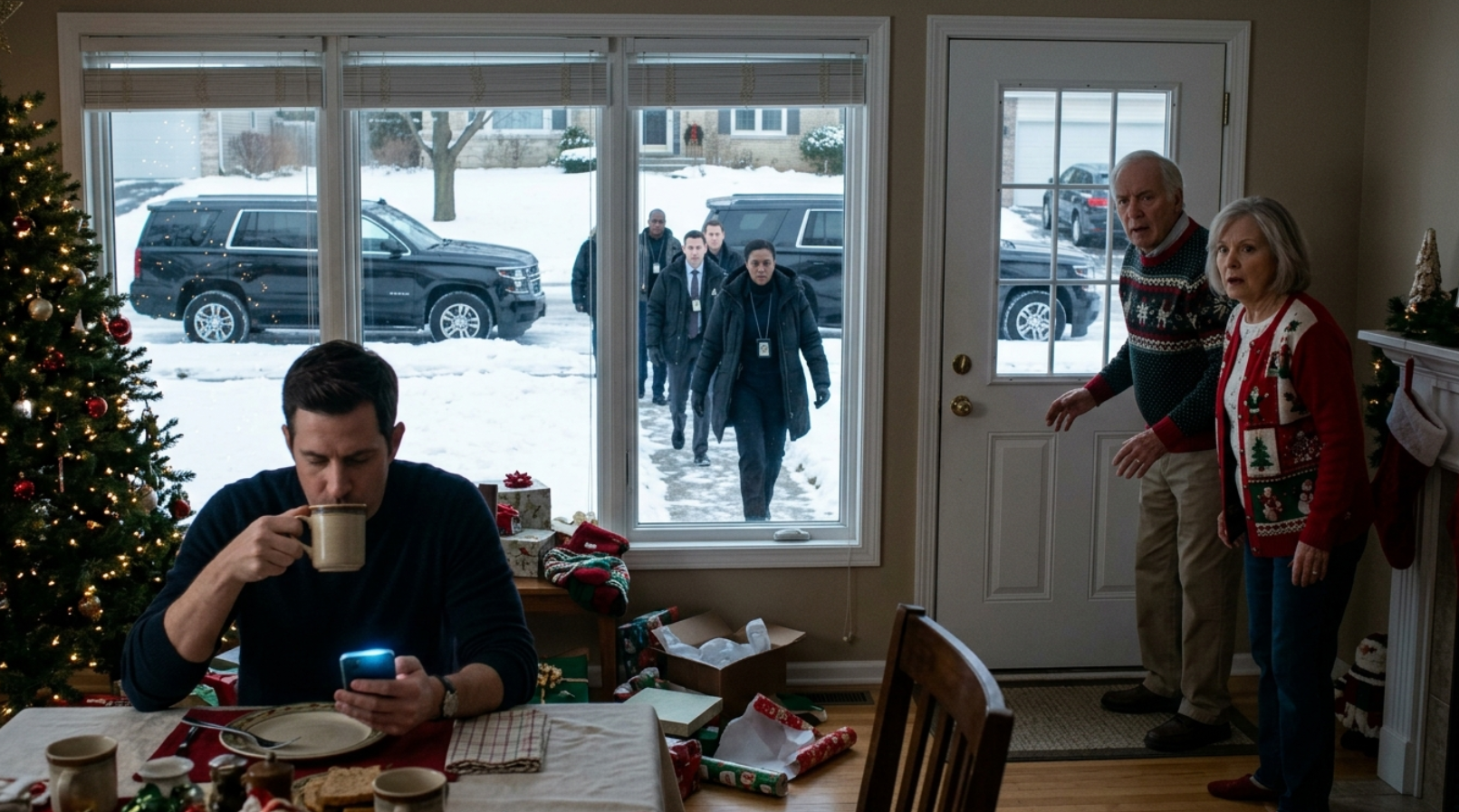
“What if we give you the entire fee?”
I stared at him.
“You still don’t understand.”
He looked frustrated.
“Then explain it to me!”
“The fee is not the only issue. The house was transferred without my authorization. A document was submitted that contains language I never signed. And you are all still trying to negotiate with me as though the only problem is how much money I receive.”
Nobody spoke.
I continued.
“If the sale had been handled properly, we could have discussed whether selling made sense. We could have obtained the necessary advice, contacted the appropriate office, and made a decision based on accurate information. Instead, you decided that my absence gave you the right to act for me.”
Mom wiped her eyes.
“We were trying to help you.”
“Then why did you never call me?”
She opened her mouth.
Nothing came out.
I waited.
Finally, she whispered, “You would have said no.”
The room became silent.
There it was.
The truth, spoken so softly that she seemed surprised to hear herself say it.
They hadn’t forgotten to ask.
They had avoided asking because they suspected I would refuse.
They had known my answer might interfere with the outcome they wanted.
So they had acted first and expected me to accept the result afterward.
I stood.
“Thank you for finally telling the truth.”
Mom reached for my hand.
“Alexis, please.”
I stepped back gently.
“I love you. But I won’t pretend this was an innocent misunderstanding just because admitting what happened is uncomfortable.”
Then I left.
For the first time in my life, I did not turn around to see whether my mother was crying.
The investigation continued for several weeks.
During that time, I returned to work and followed the instructions provided by the officials handling the matter.
I submitted my original documents.
I answered questions about the property’s designation.
I provided the correspondence showing why I had purchased the house and why the authorization I gave my parents had been deliberately limited.
I also learned that the buyer had relied on several representations made during the sale, some of which were inconsistent with the original property records.
The company had its own responsibilities to examine, but the available evidence did not establish that every person involved had known the same things or acted with the same intentions.
That distinction mattered.
I wanted the facts established, not an invented villain to make the story easier.
Eventually, the document examination produced an important finding.
The additional paragraph had not been present in the original file I signed. The available electronic records showed that the version containing the extra language had been created later.
The examination also identified the account used to transmit that version to the transaction representatives.
It was an account associated with my father’s office.
That did not, by itself, establish who had physically added the paragraph or what every participant had known. Those questions required further examination.
But it established something crucial.
The document used to support the sale was not identical to the authorization I had granted.
My father could no longer claim that the paperwork was simply the document I had signed years earlier.
When Daniel informed me of the finding, I thanked him and asked what would happen next.
He explained that the legal representatives would address the ownership dispute, the disposition of the funds, and any further issues arising from the document review.
I did not demand an immediate verdict.
I waited.
And, for the first time in my family’s history, waiting did not feel like weakness.
It felt like confidence.
In February, I received a call from Meridian Property Holdings’ legal representative.
The company wanted to discuss a possible resolution.
Its representatives had reviewed the property’s records and recognized that the transfer could not simply be treated as an ordinary, undisputed purchase. They were prepared to cooperate with the process needed to determine the property’s legal status and the appropriate remedy.
After several meetings, the parties reached an agreement subject to the required approvals and formal documentation.
The transaction would be unwound through the appropriate legal process.
The buyer would recover its funds according to the settlement terms, the title would be restored through the required procedures, and the property’s special designation would remain subject to the necessary protections and authorizations.
The agreement did not erase the questions surrounding the false authorization or decide every issue involving my parents.
Those matters were handled separately.
But the most important thing was finally happening.
My house was coming back.
When I received confirmation that the required documents had been completed and the property records had been corrected, I sat alone in my apartment and cried.
Not because of the money.
Not because I had defeated my parents.
I cried because, for months, I had felt as though something deeply personal had been taken from me by people who believed they knew better than I did.
The house represented more than an investment.
It represented a decision I had made for myself, a place connected to years of work, and a part of my life I had carefully protected.
Now it was mine again.
And this time, the paperwork reflected exactly what it should have reflected from the beginning.
My parents faced consequences for their role in the transaction.
The payment arrangement was reviewed, and the money they had received could not simply be treated as an earned fee without establishing a lawful basis for it.
The final financial resolution required accounting for the distributions, the costs of reversing the transaction, and the parties’ respective obligations.
The questions surrounding the altered authorization were also referred through the appropriate channels for further action.
I will not pretend that everything was resolved with one dramatic announcement.
Real consequences rarely arrive that neatly.
There were meetings, legal correspondence, uncomfortable conversations, and months of uncertainty.
My father had to answer questions he had spent his life believing no one would ever ask him.
My mother had to confront the difference between helping someone and making decisions for them without permission.
And both of them had to accept that being family did not exempt them from accountability.
The most painful consequence, however, was not financial.
It was the loss of trust.
For a long time, my parents had believed that I would always come back, always forgive them, and always allow them to explain away whatever they had done.
CONTINUE READ NEXT PART… 👇