
Chapter 4: The Severance
I opened my email client. Resting near the top of my inbox was the pristine, digital confirmation of the Lake Martin rental. The reservation was secured entirely under my legal name. The deposit had been authorized and charged exclusively to my platinum credit card. There was no financial co-signer. There was zero shared legal ownership of this tradition in any capacity.
Without a single tremor in my fingers, I clicked the cancellation link. The property management’s refund policy explicitly permitted a full, penalty-free cancellation through the end of October, and I was comfortably within that forgiving window. The automated confirmation of the voided contract pinged back into my inbox within three minutes.
The tradition was officially dead.
Next, I navigated to my primary banking institution’s secured payment portal. I proceeded through the digital ledgers with the exact same slow, methodical precision I apply when thoroughly reviewing a complex patient chart prior to a quarterly re-evaluation. I rushed nothing. I accounted for every single cent.
I located the automated, recurring electronic transfer I reliably dispatched to my parents’ checking account on the first of every month to subsidize their rent. I permanently terminated the sequence.
I scrolled down to the scheduled payment directed toward Briana’s luxury salon booth rental—a subsidy she was still happily receiving despite having been fully licensed, actively practicing for over fourteen months, and boasting a schedule so saturated she had proudly initiated a waitlist. I terminated the transfer.
I logged into my cellular provider’s dashboard. I located the expansive family plan that included unlimited lines for both my mother and father, a luxury I maintained because their fixed retirement income made the exorbitant monthly cost difficult to bear. I permanently unlinked and removed their phone numbers from the contract.
I navigated to the premium grocery delivery subscription I had seamlessly appended to my parents’ address two arduous winters ago during Gerald’s cardiac event, an amenity I had simply, quietly never bothered to revoke. I canceled the membership.
Once the digital bloodletting was complete, I picked up my cell phone and dialed my certified public accountant, a brilliantly sharp, perpetually unhurried professional named Lorraine Cho. Lorraine had meticulously managed my business and personal finances since the terrifying month I first opened the clinic doors.
I informed Lorraine that I required an immediate, comprehensive restructuring of my personal philanthropic giving for the impending fiscal year. I explicitly detailed that the informal, ongoing financial transfers I had been generously providing to various family members were ceasing effectively immediately, and I demanded that she document the cessation with absolute, airtight legal clarity.
Lorraine paused, asking two or three highly specific, clarifying questions in the clinical, detached manner that exceptional accountants possess—maintaining absolute professionalism without offering a shred of personal editorializing. She confirmed she would instantly update my personal file and securely transmit a digital confirmation of the structural changes.
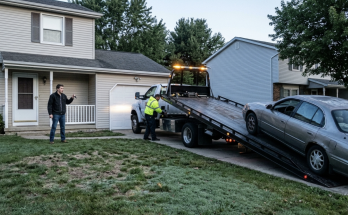
Before I severed the connection, I requested one final piece of logistical guidance. There was a vehicle legally registered exclusively under my name—the certified pre-owned sedan I had desperately purchased for Briana two years prior. At the time of the crisis, her credit score was an absolute disaster, causing the dealership’s financing to instantly evaporate unless she secured a co-signer. I had simply bypassed the bureaucracy and purchased the asset outright in my name to expedite her safety.
I asked Lorraine what my legal options were regarding the retrieval of the asset. She immediately connected me with a senior partner at her firm, an attorney named Dale Fitch, who specialized in personal asset recovery and property matters. I engaged in a brief, highly efficient fifteen-minute consultation with Dale that very same afternoon.
The conclusion was undeniable: the vehicle was unequivocally, legally mine. I authorized Dale to contract a licensed recovery agency. I arranged for the vehicle to be quietly, legally repossessed from the parking lot of Briana’s upscale apartment complex the following Tuesday afternoon, precisely when I knew she would be miles away, deeply occupied with clients at the salon.
I did not derive an ounce of sadistic joy from any of this. I need to state that with absolute, crystalline clarity.
There is a fictional, cinematic version of this narrative where I felt immensely powerful, vibrating with righteous, vengeful fury as I went through each line item in that banking portal, striking them down like a wrathful god. But that version is a complete fabrication. The emotion coursing through my veins felt infinitely closer to a profound, suffocating grief than it did to satisfaction. It was the specific, crushing breed of mourning that only materializes when you are finally forced to be brutally honest about a horrific reality you have spent years pretending not to comprehend.
I had been willfully pretending not to know that the vast, silent generosity I had been practicing—given quietly, without keeping a vocal score, without ever demanding, “Look at the sacrifices I have made for you”—had been entirely absorbed by my family not as a gift, but as an absolute given. I had become their infrastructure. I was the plumbing. I was the electrical grid. I was the kind of utility that simply exists, expected to function flawlessly without anyone ever needing to expend a single brain cell contemplating where the power actually originates.
I had desperately told myself that this was how genuine, pure generosity was supposed to operate. You do not make the people you love feel indebted. You do not arrogantly wave the flag of your sacrifices. You simply provide the safety net.
What I hadn’t allowed my clinical mind to examine closely enough was the toxic reality that generosity stripped of acknowledgement—freely given year after year to individuals who eventually cease entirely to notice the weight of it—is no longer a virtue. It is a highly destructive habit that actively teaches the recipient the absolute wrong lesson regarding your humanity.
My own mother, dialing my number on a random Wednesday morning to casually dictate that my seven-year-old daughter was banned from a Thanksgiving celebration I had single-handedly financed for two consecutive years, was the exact, horrifying moment that terrible lesson finally came due for collection.