PART 4
For several seconds, I couldn’t speak.
Daniel was standing across from me, watching my face.
Caleb was crying on the phone.
And somehow, in the middle of all that chaos, one sentence kept repeating in my mind.
She didn’t do it alone.
“Who helped her?” I asked.
Caleb breathed shakily.
“I don’t know.”
“Caleb.”
“I swear, Mom. I don’t know everything.”
“Then tell me what you do know.”
“I found something in her laptop.”
“What?”
“Emails.”
My fingers tightened around the phone.
“What kind of emails?”
“Between Sloan and my father-in-law.”
I looked at Daniel.
He immediately understood.
“Do you have copies?” I asked.
“Yes.”
“Send them to me.”
“I can’t.”
“Why?”
“Because Sloan has my phone.”
I frowned.
“What?”
“She took it.”
“Caleb, where are you?”
There was a long pause.
“In the parking lot.”
“Why?”
“Because she told me to go get something from the car.”
His voice dropped.
“Mom, I don’t think I’m supposed to be talking to you.”
I stood up.
“Then listen carefully.”
“Okay.”
“Don’t confront Sloan.”
“I won’t.”
“Don’t tell her you’ve spoken to me.”
“I won’t.”
“Go somewhere public.”
“Mom—”
“Caleb, listen to me. You said you didn’t know what was happening. If that’s true, then you need to protect yourself and the children.”
He began crying again.
“I never wanted this.”
“I know.”
“I just wanted things to be easier.”
I closed my eyes.
“So did I.”
He whispered:
“I’m sorry.”
I almost told him I forgave him.
But I didn’t.
Not yet.
Forgiveness was something that came after truth.
And we hadn’t reached the truth.
“Caleb,” I said, “do exactly what I tell you.”
“I will.”
“Go inside the lodge.”
“Okay.”
“Stay with the children.”
“Okay.”
“And don’t give Sloan or her parents access to your bank accounts, your identification, or anything else important.”
“Mom?”
“Yes?”
“I think they’re planning something tonight.”
My blood ran cold.
“What?”
“I overheard Sloan talking to her father.”
“What did they say?”
“She said the house had to be handled before you could talk to anyone.”
Daniel’s expression changed.
“Ask him what he means,” he mouthed.
I did.
“What did she mean by handled?”
“I don’t know.”
“Caleb.”
“She said something about getting you out of the house.”
I looked at Daniel.
He was already reaching for his phone.
“Where are you staying tonight?” I asked.
“The lodge.”
“Are they staying there too?”
“Yes.”
“Then don’t sleep there.”
“What?”
“Get the children out.”
“Where?”
“Anywhere public. A hotel. Police station. Airport. I don’t care. Just don’t stay in a place where you can be isolated.”
“Mom, it’s snowing.”
“I know.”
“And the roads—”
“Then stay inside the lodge lobby until you can get somewhere safe.”
He was quiet.
Then he said:
“Okay.”
I heard a door slam in the background.
His voice suddenly became barely audible.
“Mom, I have to go.”
“Caleb—”
“I love you.”
The call ended.
I stared at the phone.
Daniel immediately asked, “Did he say where they were?”
I shook my head.
“No.”
“Then we need to move quickly.”
He opened his folder again.
“This is bigger than a family argument.”
“I know.”
He pulled out another document.
“This is the original version of your will.”
I looked at it.
“That’s mine.”
“Yes.”
“And the new one?”
He placed the second document beside it.
I looked between them.
The signatures were almost identical.
Almost.
But not quite.
Daniel pointed to a line near the bottom.
“Your signature here is supposed to be witnessed by two people.”
I looked closer.
“Who are the witnesses?”
He turned the page.
My heart sank.
“Sloan’s mother.”
I looked at the second name.
“Sloan’s father.”
Daniel nodded.
“Neither of them was in this house when you supposedly signed it.”
“Exactly.”
I stared at the documents.
“So they forged my will.”
“It appears that way.”
“And they borrowed $38,400 against my house.”
“That’s what the bank records suggest.”
“And they were trying to put my house into a family trust.”
“Yes.”
“Then why did they want me to sell it?”
Daniel looked at me.
“Because once the property was sold, the money would have been easier to control.”
I felt sick.
“How much is this house worth?”
He gave me a number.
I nearly laughed.
Not because it was funny.
Because suddenly their behavior made sense.
The house was worth almost $900,000.
They weren’t fighting over a vacation.
They were fighting over my future.
My son’s future.
And perhaps their future.
But not in the way I had imagined.
I had spent three years believing I was helping my son.
They had spent three years studying what I owned.
Daniel closed the folder.
“We need to get the bank involved tonight if possible.”
“It’s Christmas Eve.”
“I know.”
“Will anyone answer?”
“Fraud departments don’t celebrate Christmas.”
For the first time that evening, I smiled.
“Good.”
The next four hours became a blur.
Daniel helped me document everything.
The bank confirmed that the home equity withdrawals had been made using credentials connected to my account.
The insurance company confirmed someone had recently requested a copy of my property records.
My attorney contacted the county recorder’s office.
Nothing had been transferred yet.
That was the good news.
The bad news was that someone had been trying.
Then, at 10:18 p.m., Caleb called again.
This time, he wasn’t crying.
He was terrified.
“Mom.”
“Where are you?”
“I’m outside.”
“Outside where?”
“The lodge.”
“Why?”
“They kicked me out.”
I froze.
“Who?”
“Sloan and her parents.”
My stomach turned.
“What about the children?”
“They’re inside.”
“Caleb!”
“I tried to take them with me.”
“What happened?”
“She said I was unstable.”
Daniel leaned closer.
I put the call on speaker.
“Caleb,” Daniel said, “are you physically safe?”
There was a pause.
“Who is that?”
“Daniel.”
“My attorney.”
Caleb went silent.
Then he said:
“Oh God.”
“What?”
“I remember him.”
“Caleb,” Daniel said, “you need to go to the nearest police station.”
“I can’t.”
“Why?”
“Sloan has my identification.”
Daniel looked at me.
I understood.
This wasn’t just about money anymore.
It was control.
“Caleb,” I said, “listen to me.”
“Okay.”
“Go to the police station.”
“I’ll try.”
“No.”
My voice became firm.
“You will.”
He was silent.
“Mom…”
“You have spent three years believing that keeping peace means allowing people to hurt you.”
He didn’t answer.
“Your children are watching you.”
That broke something in him.
“Okay.”
“I’ll stay on the phone.”
He started walking.
The wind blew hard through the phone.
After several minutes, he said:
“I’m going.”
“Good.”
Then suddenly he stopped.
“Mom?”
“Yes?”
“I see a police car.”
“Go to them.”
I heard footsteps.
Then voices.
Then the call disconnected.
Daniel sat back.
“We wait.”
So we did.
At 11:04 p.m., my phone rang.
A police officer.
He told me Caleb was safe.
He also told me something else.
Sloan had called the police first.
She claimed Caleb had become aggressive.
The officer said they were investigating.
Then he asked me whether I knew anything about a dispute involving my property.
I looked at Daniel.
“Yes,” I said.
“I think my son is being manipulated.”
The officer’s voice became more serious.
“Mrs. Morgan, don’t discuss the details over the phone. Come in tomorrow morning.”
“I will.”
After the call ended, Daniel looked at me.
“Try to sleep.”
“I don’t think I can.”
“Then rest.”
“I have spent years worrying about my son.”
He nodded.
“Tonight is the first night you need to worry about yourself.”
I looked around my living room.
The Christmas lights were still glowing.
The tree was beautiful.
The house was warm.
And for the first time, it felt like mine again.
Christmas morning arrived quietly.
There were no children running downstairs.
No laughter.
No Christmas music blasting from the television.
No Sloan complaining that someone had eaten the expensive chocolates.
Just sunlight.
I made coffee.
Then I sat at the kitchen table.
At 7:31 a.m., my phone buzzed.
A message from Caleb.
I’m sorry.
Another followed.
The kids are with me.
Then:
I found the emails.
A file appeared.
I opened it.
There were dozens of messages.
Sloan and her father had been discussing my finances for months.
They had discussed the home equity line.
They had discussed my will.
They had discussed the possibility of convincing me to sell.
They had even discussed my health.
One message from Sloan’s father made my hands go numb.
If she keeps resisting, we need to make her believe she can’t manage the house anymore.
Another:
Caleb will eventually choose the kids over her.
And then the message that broke my heart:
Once she sells, Caleb gets his share. We can finally get out from under this mess.
I read that sentence three times.
Caleb gets his share.
Not Caleb gets help.
Not Caleb deserves a home.
Not We should take care of Helena.
Just money.
I closed the email.
Then another message arrived.
From Caleb.
Mom, there’s more.
He sent another file.
This one contained a photograph.
It was a copy of a bank form.
At the bottom was a signature.
My signature.
But the date was from a day when I had been hospitalized.
I stared at it.
Then I understood.
Sloan hadn’t just betrayed me.
She had planned this.
And my son had been standing in the middle of it without realizing how far it had gone.
The police investigation lasted months.
The bank froze the suspicious account activity.
The forged documents were examined.
The home equity withdrawals were traced.
The attempted transfer of the property was stopped.
Sloan and her parents were eventually charged with financial fraud and forgery.
The exact legal consequences took time.
There were hearings.
Lawyers.
Statements.
Documents.
Evidence.
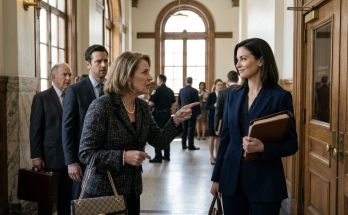
And more than once, I sat across from Sloan in a courtroom and watched the woman who had once called me Mom refuse to look at me.
Her parents blamed her.
She blamed them.
They claimed they had misunderstood the paperwork.
Then the emails were introduced.
There wasn’t much left to misunderstand.
The most painful part wasn’t the money.
It wasn’t even the house.
It was learning that the people I had welcomed into my home had spent years discussing me as though I were an obstacle.
A bank account.
A property.
A signature.
A number.
Not a mother.
Not a grandmother.
Not a person.
Just an asset.
Caleb eventually moved out.
Not into my house.
Not immediately.
He found a small apartment and got a new job.
He started paying his own bills.
He took the children to counseling.
And for the first few months, he barely asked me for anything.
That was how I knew he was changing.
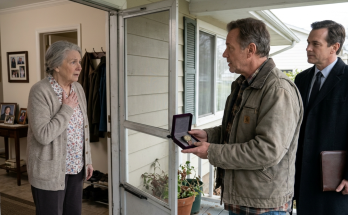
One evening, almost six months after Christmas, he came to my house.
He stood on the porch holding a small box.
“I brought you something.”
I opened the door.
“What is it?”
He handed me the box.
Inside was a Christmas ornament.
A simple wooden house.
On the bottom, someone had written:
HOME IS WHERE YOU ARE LOVED.
I looked at him.
“Why are you giving me this now?”
He swallowed.
“Because last Christmas I forgot what home meant.”
I didn’t say anything.
He looked down.
“I thought you would always forgive me.”
I finally spoke.
“I probably will.”
He looked up.
“But forgiveness doesn’t mean you get to hurt me again.”
His eyes filled with tears.
“I know.”
“I love you.”
“I love you too.”
“But I need you to understand something.”
He nodded.
“My house is not your inheritance while I’m alive.”
“I know.”
“My money isn’t your emergency fund.”
“I know.”
“And my love isn’t something you earn by behaving perfectly.”
He wiped his eyes.
“I know.”
I smiled.
“Good.”
Then I opened my arms.
He hugged me.
It wasn’t the hug of a son who needed something.
It was the hug of a son who had finally understood what he had almost lost.
A year later, Christmas Eve came again.
This time, the house was different.
There were grandchildren running through the living room.
There was music.
There was food.
There were presents stacked beneath the tree.
But there was something else.
A new family tradition.
Nobody traveled without telling everyone.
Nobody assumed.
Nobody expected.
And nobody was invited because they were paying for the trip.
They were invited because they were loved.
Caleb arrived carrying a turkey.
His children ran into my arms.
“Grandma!”
I laughed.
Sloan wasn’t there.
The marriage had ended months earlier.
Her parents were no longer part of our lives.
It had been painful.
But sometimes removing the wrong people from your life creates space for the right ones.
That evening, Caleb helped me set the table.
He looked around.
“Mom?”
“Yes?”
“Do you remember that Christmas?”
I smiled.
“The mountain trip?”
“Yes.”
“How could I forget?”
He shook his head.
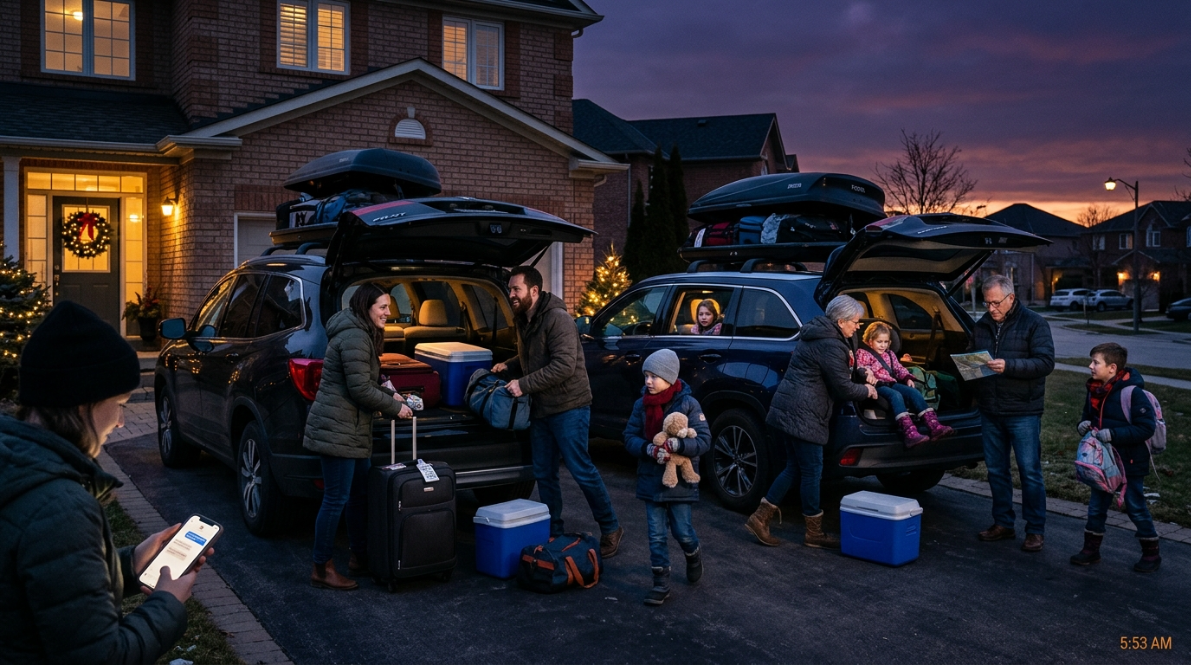
“I still can’t believe we did that.”
“You didn’t.”
He looked confused.
“I did.”
He smiled.
“Fair enough.”
Then he became serious.
“Thank you.”
“For what?”
“For canceling it.”
I raised an eyebrow.
“You’re thanking me for ruining Christmas?”
“No.”
He looked toward his children.
“For saving us.”
I didn’t answer.
Because I knew what he meant.
The canceled vacation had been the moment everything collapsed.
But it had also been the moment the truth finally surfaced.
If I had quietly paid for another hotel, they might have continued.
If I had apologized, they might have continued.
If I had ignored the missing group chat, they might have continued.
If I had signed the papers they put in front of me, I might have lost everything.
Sometimes the most important thing you can cancel isn’t a reservation.
It’s your willingness to keep accepting disrespect.
Later that night, after everyone had gone home, I stood by the Christmas tree.
The house was quiet again.
But this time, the quiet didn’t hurt.
I looked at the wooden ornament Caleb had given me.
Then I noticed something hanging beside it.
An old photograph.
Caleb at six years old.
Missing his two front teeth.
His arms wrapped around my waist.
I smiled.
I had spent years believing being a good mother meant giving everything.
My money.
My home.
My time.
My forgiveness.
My peace.
But I finally understood something.
Love without boundaries isn’t always love.
Sometimes it is permission.
And the day I canceled that $12,500 Christmas vacation, I didn’t cancel Christmas.
I canceled the idea that my family could take everything from me and still call it love.
I turned off the lights.
Then I locked the front door.
My house.
My life.
My rules.
And for the first time in a very long time, I went upstairs without wondering what anyone else wanted from me.
I went to bed peaceful.
Because the greatest gift I received that Christmas wasn’t a refund.
It wasn’t justice.
It wasn’t even the truth.
It was something much simpler.
I finally learned that saying no does not make you selfish.
Sometimes saying no is the first time you finally say yes to yourself.
And that was the Christmas I got my home back.
Not because I had won a fight.
But because I had finally remembered that I was worth protecting, too.