
Chapter 6: The Blacklist and the True Wealth
I didn’t listen to the voicemails.
When I had turned my phone back on the morning after we arrived in Key West, my screen was a chaotic, desperate war zone of notifications. There were forty-seven missed calls from Betsy. Dozens of frantic, enraged, and eventually pathetic, begging text messages from Pamela.
I simply highlighted the entire thread, deleted the voicemails without playing a single second of audio, blocked their numbers from my device, and dropped my phone deep into the bottom of my woven beach bag. I spent the next five days drinking mojitos, watching my father learn how to snorkel, and falling deeper in love with the man who had chosen his wife over his bloodline.
Six months later, the toxic, echoing screams of Pinecrest Lake were nothing but a distant, pathetic, entirely irrelevant memory.
The fallout from that weekend had been absolute, catastrophic, and deeply systemic for the Vance women.
Without the invisible, automated corporate dividends I had been secretly funneling into Lucas’s account to fund his mother’s life, Betsy’s carefully curated, desperately maintained illusion of high-society wealth had completely, spectacularly collapsed.
We heard through the inevitable grapevine of mutual acquaintances that the reality of their poverty had hit hard and fast. Without the platinum card to pay her exorbitant country club dues or her luxury car lease, Betsy’s vehicle had been quietly repossessed in the middle of the night. Pamela, realizing her mother was broke and her brother was entirely inaccessible, was forced to swallow her pride and get a retail job at a local high-end boutique, waiting on the very women she used to gossip with.
Betsy had been forced to downsize drastically, moving from her sprawling suburban home into a cramped, outdated two-bedroom apartment. She was entirely, aggressively blacklisted from the luxury circles she had once terrorized, becoming a ghost haunting the ruins of a lifestyle she had never actually earned or owned.
They were trapped in the mediocrity of their own making.
In stark, beautiful contrast, the empire Lucas and I were building was thriving, anchored by a newly forged foundation of absolute, unshakable loyalty and profound mutual respect. Without the constant financial and emotional drain of managing his mother’s manufactured crises, Lucas’s own architectural consulting firm had taken off, securing massive contracts. My company had expanded into two new states. We were wealthy, yes, but more importantly, we were entirely at peace.
On a bright, crisp Tuesday morning in early autumn, Lucas and I rented a car and drove back to my parents’ small, blue-collar, rust-belt town in Ohio.
We didn’t arrive in a flashy, chauffeur-driven limousine. We didn’t arrive with designer bags or arrogant, aristocratic demands.
We arrived carrying a heavy, thick manila folder.
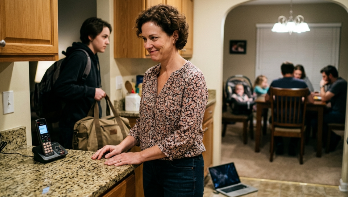
We walked into the small, familiar, slightly worn house I had grown up in. I sat down at the scratched, faded Formica kitchen table where I had spent countless nights studying, crying over math homework, and dreaming of building something bigger.
I slid the heavy manila folder across the table toward my father.
Walter looked at it, confused. He wiped his hands on his jeans and slowly opened the flap. His calloused, aging, permanently stained hands began to tremble, just as they had in the foyer of the mountain cabin, but this time, the tremor was born of an entirely different emotion.
Inside the folder rested the official, notarized deed to their current home, stamped boldly in red ink: PAID IN FULL.
But that wasn’t all. Resting beneath it was a second deed. It was the title, free and clear, to a beautiful, expansive, fully updated lakefront property located three towns over, nestled in a quiet, working-class community where neighbors still helped each other shovel snow.
“You don’t ever have to worry about the aesthetic of a suitcase ever again, Dad,” Lucas said gently, his voice thick with emotion. He reached out and placed a strong, reassuring hand firmly on my father’s trembling shoulder. “Because from now on, you’re never leaving your own property. You own the lake.”
My mother, Nancy, let out a choked, beautiful sob. She rushed around the table, pulling me into a fierce, desperate, incredibly tight embrace, her tears soaking the shoulder of my blouse.
I looked across the table at my husband. I looked at the man who had stood in a freezing foyer and chosen honor, dignity, and justice over his own toxic bloodline.
The miserable, arrogant woman in the mountain cabin who had aggressively demanded we leave before we contaminated her luggage had been entirely, fundamentally wrong about the nature of the world.
True wealth doesn’t contaminate. True wealth doesn’t isolate, mock, or destroy.
True wealth protects.
And as I sat in the humble, worn kitchen that had built the foundation of my entire future, surrounded by the people who truly mattered, I realized a profound, unbreakable truth. The greatest luxury money could ever buy wasn’t a mountain estate or a private chef. It was the absolute, unassailable power to choose exactly who gets to sit at your table, and the freedom to permanently lock the door against anyone who doesn’t respect the feast.
If you want more stories like this, or if you’d like to share your thoughts about what you would have done in my situation, I’d love to hear from you. Your perspective helps these stories reach more people, so don’t be shy about commenting or sharing.