PART 3
I simply nodded.
“Maybe I am.”
Mom looked shocked.
“You admit it?”
“I admit that I’m finally taking care of my daughter before I take care of everyone else.”
Dad stepped closer.
“You’re going to regret this.”
I looked at him.
“I already regret something.”
“What?”
“Waiting this long.”
Neither of them answered.
A doctor came through the doors behind us and approached.
“Nate?”
I immediately turned.
“Yes?”
“We’d like to speak with you.”
My stomach tightened.
“Is Maya okay?”
“She is stable. But we received some additional test results, and there are a few things we need to discuss.”
I followed the doctor into a small consultation room.
My parents stayed in the hallway.
For the next twenty minutes, everything else disappeared.
The doctors explained that Maya’s asthma attack had been unusually severe. There were environmental triggers they wanted to investigate, and they recommended several changes at home.
Air filters.
A thorough inspection for mold.
New medication.
Follow-up appointments.
A specialist.
Nothing was guaranteed.
But there was hope.
When I returned to Maya’s room, I found her awake.
Her eyes opened slowly.
“Dad?”
I sat beside her immediately.
“Hey, kiddo.”
“Are we going home?”
“Soon.”
She looked toward the door.
“Grandma and Grandpa were here.”
“Yeah.”
“Did they come to see me?”
I froze.
There was no good answer.
So I gave her the honest one.
“They came to talk to me.”
Her expression changed.
“About the party?”
I looked at her.
“How did you know?”
She shrugged.
“I heard Grandma talking.”
My heart sank.
“What did she say?”
Maya looked down at her blanket.
“She said you were ruining everything.”
I closed my eyes for a second.
Then I reached for her hand.
“None of that is your fault.”
“I know.”
“You don’t have to worry about grown-up problems.”
She was quiet.
Then she whispered,
“Dad?”
“Yeah?”
“Did I ruin Aunt Clara’s party?”
My chest tightened.
“No.”
“But Grandma said—”
“No.”
I squeezed her hand.
“You being sick didn’t ruin anything.”
She looked at me.
“The party was never more important than you.”
Something in her face softened.
And in that moment, I realized something painful.
My family had spent years convincing me that I owed them everything.
Without realizing it, I had almost taught my daughter that she was supposed to apologize for needing me.
That ended that day.
Maya stayed in the hospital for another four days.
Every day, her breathing improved.
Every day, I became more certain about what I needed to do.
When she was finally discharged, I didn’t take her straight home.
I took her to a hotel.
She looked at me strangely.
“Why are we staying here?”
“I’m having the house checked.”
“For what?”
“Anything that could make your asthma worse.”
She nodded.
We spent the night watching old movies on my laptop.
For the first time in years, I didn’t answer family messages.
I didn’t check on Dad.
I didn’t ask whether Clara’s party had gone well.
I didn’t care.
The next morning, an environmental inspection company arrived at my house.
By afternoon, they found something.
Mold.
Not a little.
A serious problem hidden behind a wall in the room next to Maya’s bedroom.
The inspector showed me photographs.
My stomach dropped.
“How long has that been there?”
“Impossible to say,” he told me. “But judging from the growth, probably a long time.”
I thought about all those nights Maya had struggled to breathe.
All the urgent-care visits.
All the times I had blamed myself.
I had thought I wasn’t doing enough.
I hadn’t known there was something inside our own walls.
I immediately arranged for repairs.
While workers began removing damaged materials, I received a message.
It was from my mother.
You need to come to the house.
I ignored it.
Another message appeared.
This is serious.
I ignored that too.
Then Dad called from a number I didn’t recognize.
I answered.
“What?”
His voice was furious.
“You think you can just cut us off?”
“I don’t have time for this.”
“Your mother has been crying all day.”
“I hope she’s okay.”
“Don’t mock me.”
“I’m not.”
“Clara’s party was a disaster.”
I said nothing.
“The caterer demanded payment.”
I looked at the workers carrying damaged drywall out of my house.
“That isn’t my responsibility.”
“You promised.”
“No.”
“You said you’d handle it.”
“I was told I’d handle it.”
“You’re part of this family!”
I finally understood.
They hadn’t called because they missed me.
They called because something they expected me to pay for had gone wrong.
“I have to go.”
“Nate—”
I hung up.
For the first time, I felt no guilt.
Three weeks passed.
Maya returned to school.
I rearranged my work schedule.
I learned more about asthma than I ever thought possible.
I cleaned the house.
Replaced the filters.
Changed the ventilation system.
Bought new bedding.
Made a small emergency kit for her backpack.
And every night, I checked on her before going to sleep.
Life became quieter.
Not easier.
But quieter.
Then one Friday evening, someone knocked on my door.
I expected a delivery.
Instead, I found Clara standing outside.
She looked different.
Not physically.
Something about her expression had changed.
“You can’t be here,” I said.
“I know.”
“Then why are you?”
She looked down.
“Because I need to apologize.”
I almost closed the door.
“Clara—”
“Please.”
I stopped.
She swallowed.
“I didn’t know Maya was that sick.”
I stared at her.
“You knew she was in critical care.”
“I knew she was in the hospital.”
“That isn’t the same thing.”
“I know.”
She looked exhausted.
“I should have asked.”
“Yes.”
“I should have told Mom to stop.”
“Yes.”
“I should never have expected you to pay for my party.”
I said nothing.
She looked at me.
“Can I come in?”
I hesitated.
Then I stepped aside.
She entered slowly.
The house looked completely different.
New filters.
New furniture in Maya’s room.
Plastic containers filled with medications.
A pulse oximeter on the kitchen counter.
Clara stared at everything.
“Is she okay?”
“She is now.”
“I heard about the mold.”
“Yes.”
Clara’s eyes filled with tears.
“I didn’t know.”
“You weren’t supposed to know. But you were supposed to care.”
She nodded.
“I did care.”
“Then why didn’t you call?”
She had no answer.
After several seconds, she whispered,
“Because Mom was angry with you.”
I laughed bitterly.
“So you chose Mom’s anger over your niece’s health.”
Clara looked away.
“I was scared.”
“Of what?”
“That if I defended you, they’d stop helping me.”
There it was.
The truth.
For the first time, I understood something about my sister.
She hadn’t been strong.
She had simply learned a different way to survive the same family.
I had become useful.
She had become dependent.
Dad had created a system where both of us were trapped in different ways.
But that didn’t excuse what she had done.
“You’re an adult, Clara.”
“I know.”
“You have to take responsibility for your life.”
“I know.”
She wiped her eyes.
“I’ve already started.”
“What does that mean?”
“I got another job.”
I raised an eyebrow.
“I’m working evenings.”
“That’s good.”
“And I moved out.”
That surprised me.
“Where?”
“A small apartment.”
“Good.”
She smiled sadly.
“I sold some of my jewelry to pay the deposit.”
I nodded.
“That was your decision.”
“Yes.”
She took a breath.
“Nate?”
“Yeah?”
“Dad isn’t doing well.”
I felt something inside me tighten.
“What happened?”
“He lost his temper with Mom.”
“Physically?”
Clara shook her head quickly.
“No. He just… he’s angry all the time.”
I said nothing.
“He keeps saying you betrayed the family.”
“He means I stopped paying.”
“I know.”
She looked toward the kitchen.
“There’s something else.”
“What?”
“Dad’s business is in trouble.”
I stared at her.
“What business?”
“The construction company.”
“I thought it was doing fine.”
“So did I.”
“What happened?”
“Debt.”
“How much?”
She gave me a number.
I almost laughed.
Not because it was funny.
Because it was enormous.
“And you’re telling me because?”
She looked at me.
“Because he wants you to save it.”
Of course.
Of course he did.
Even after everything.
I shook my head.
“No.”
“I figured.”
“Then why tell me?”
“Because I don’t want him coming after you unexpectedly.”
That answer caught me off guard.
“Thank you.”
She nodded.
Then she stood.
“I should go.”
“Clara.”
She turned.
“I meant what I said.”
“About what?”
“I’m glad you’re okay.”
Her eyes filled again.
“I am too.”
She left.
I watched her walk down the driveway.
For the first time in my life, I didn’t feel responsible for what happened next.
Two weeks later, Dad showed up.
This time, he didn’t come alone.
A man in a gray suit stood beside him.
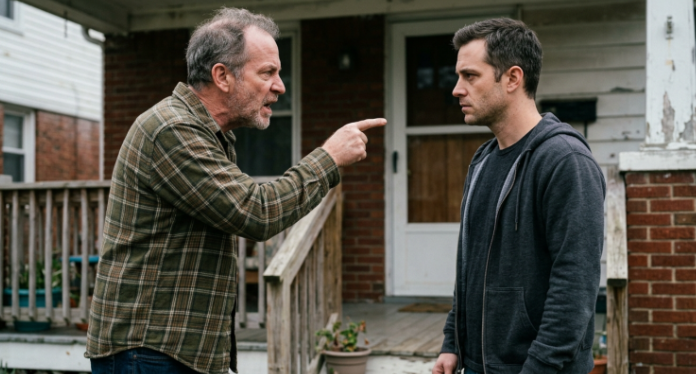
Dad didn’t knock.
He pounded on the door.
I opened it.
“What do you want?”
“You know exactly what I want.”
“No.”
He held out a folder.
“I need you to sign these.”
I didn’t take it.
“What are they?”
“Loan documents.”
I almost smiled.
“You’ve lost your mind.”
“This is temporary.”
“You want me to guarantee your business loan?”
“You have excellent credit.”
“No.”
“You owe this family.”
There it was again.
That word.
Owe.
I stepped onto the porch.
“I don’t owe you my credit.”
“You’re my son.”
“And Maya is my daughter.”
He flinched.
I continued.
“You keep using the word family whenever you want something.”
He stared at me.
“Family isn’t a bank account.”
His face turned red.
“You ungrateful—”
The man beside him finally spoke.
“Mr. Carter, perhaps we should discuss this calmly.”
Dad looked at him.
“Stay out of it.”
I looked at the man.
“Are you his attorney?”
“Yes.”
“Then you already know I have no obligation to sign anything.”
He nodded.
“I’ve advised him of that.”
Dad turned toward him.
“You’re supposed to help me.”
“I am helping you.”
The attorney sighed.
“Your son’s signature isn’t required by law.”
Dad stared at him.
Then he looked back at me.
“You’re really going to let your own father lose everything?”
I thought about all the years I had spent believing his problems were mine.
Then I thought about Maya lying in a hospital bed.
“No,” I said.
Dad’s expression softened slightly.
I continued.
“I’m going to let you deal with your own consequences.”
His face fell.
“You’ll regret this.”
“I’ve heard that before.”
I closed the door.
This time, my hands weren’t shaking.
Six months later, my father sold the construction company.
He lost the large house.
He moved into a smaller place.
Mom moved with him.
Clara kept working.
She didn’t ask me for money again.
Instead, she started sending Maya little care packages.
Books.
Art supplies.
Sometimes a note.
Never money.
Never requests.
Just love.
Slowly, cautiously, our relationship began to heal.
Not because I returned to being the family rescuer.
Because everyone finally understood that loving someone didn’t mean allowing them to use you.
Dad took longer.
Much longer.
Almost a year passed before he called me.
I nearly didn’t answer.
But I did.
“Hello?”
Silence.
Then his voice.
“Nate.”
“Dad.”
“I wanted to ask about Maya.”
I closed my eyes.
“How is she?”
“She had another checkup last week.”
“And?”
“She’s doing well.”
A pause.
“Good.”
Another pause.
Then he said something I had never heard from him before.
“I’m sorry.”
I sat down.
“For what?”
“For making you feel like you were only valuable when you were useful.”
My throat tightened.
He continued.
“I didn’t realize what I was doing.”
I wanted to say that he should have.
I wanted to remind him of every bill.
Every phone call.
Every guilt trip.
Every time I had put him first.
Instead, I said,
“I needed you to care about me without needing something from me.”
“I know.”
“Do you?”
“Yes.”
His voice sounded older.
Tired.
“I lost a lot because of my pride.”
I looked toward the hallway.
A drawing Maya had made was hanging on the wall.
Three people holding hands beneath a blue sky.
Me.
Her.
And a smaller figure she had labeled simply:
Hope.
Dad spoke again.
“I’d like to see her.”
I took a breath.
“You can.”
“But?”
“But there are rules.”
He laughed softly.
“I figured.”
“You don’t criticize her.”
“I won’t.”
“You don’t discuss money.”
“I won’t.”
“And you don’t make her feel responsible for adult problems.”
“I promise.”
I nodded even though he couldn’t see me.
“Then you can come Sunday.”
Sunday came.
Dad arrived carrying a small box.
Maya opened the door.
She stared at him.
He looked nervous.
More nervous than I had ever seen him.
“Hi, Grandpa.”
Dad smiled.
“Hi, sweetheart.”
He held out the box.
“I brought you something.”
Maya opened it.
Inside was an old wooden music box.
She looked at him.
“It’s beautiful.”
“It belonged to my mother.”
I stared at him.
Dad rarely gave anything away.
Especially something sentimental.
“I thought you might like it.”
Maya hugged him.
He froze.
Then slowly wrapped his arms around her.
I looked away.
Not because I was ashamed.
Because I suddenly realized something.
Boundaries hadn’t destroyed my family.
They had forced us to find out whether there was anything real underneath all the obligation.
And there was.
Not the old family.
Not the one where love meant paying bills.
Not the one where saying no made you selfish.
Something different.
Something healthier.
Something that could finally survive without one person carrying everyone else.
That evening, after Dad left, Maya sat beside me.
“Dad?”
“Yeah?”
“Are we a family again?”
I looked at her.
“We never stopped being one.”
She smiled.
“Even when Grandpa was mad?”
“Especially then.”
She leaned against my shoulder.
“Good.”
I kissed the top of her head.
Outside, the sun was setting.
For years, I had thought protecting my family meant sacrificing myself for them.
I finally understood the difference.
Sacrifice can be love.
But losing yourself completely is not.
Love needs boundaries.
Family needs respect.
And sometimes the most loving thing you can do is stop rescuing people from consequences they need to face themselves.
I had spent thirty-six years trying to prove I was a good son.
Then my daughter got sick.
And she taught me what being a good father actually meant.
It meant showing up.
It meant choosing her.
It meant saying no when everyone else demanded yes.
And most importantly, it meant teaching her that she never had to earn love by making herself useful.
That night, Maya fell asleep on the couch beside me.
Her breathing was calm.
Steady.
Peaceful.
I listened for a moment.
Then I smiled.
For the first time in years, the silence in my house didn’t feel lonely.
It felt like peace.
CONTINUE READ NEXT PART… 👇
Related Posts