
A significant personnel change has taken place at the U.S. State Department as veteran diplomat Troy Fitrell prepares to retire from government service. Fitrell, who has been serving as the State Department’s senior official overseeing African affairs, is scheduled to leave at the end of July, bringing an end to a long Foreign Service career that included senior assignments across the African continent. (Conservative Brief)
The departure comes at a consequential moment for American diplomacy. The Trump administration has been reshaping the State Department around its “America First” foreign-policy priorities, while simultaneously confronting wars, regional instability, competition with China and Russia, and a changing U.S. diplomatic footprint overseas.
Fitrell’s retirement therefore represents more than the departure of one longtime diplomat. It also provides a window into the broader transformation taking place inside America’s foreign-policy establishment.
A Career Spent in American Diplomacy
Troy Fitrell is a career Foreign Service officer whose professional life has been closely connected with Africa and U.S. diplomacy.
Before becoming the State Department’s senior official for African affairs, Fitrell held a variety of positions involving the continent. He previously served as the U.S. ambassador to Guinea and worked in senior positions dealing with Western and Southern African affairs. He also served as deputy chief of mission at U.S. embassies in Ethiopia and Mauritius. (Conservative Brief)
Those assignments gave Fitrell extensive experience dealing directly with African governments, regional political leaders and U.S. diplomats working on the ground.
His career also illustrates something important about the Foreign Service: many of the officials who occupy influential positions are not household names. Unlike cabinet secretaries or presidential advisers, career diplomats generally operate away from the spotlight.
Yet their decisions can have enormous consequences.
They negotiate with foreign governments, advise American ambassadors, assess political developments and help Washington understand countries where the United States has significant security, economic and humanitarian interests.
His Departure Comes During a Broader State Department Transformation
Fitrell’s retirement is occurring against the backdrop of a major restructuring of the State Department under President Donald Trump.
When Trump returned to office, his administration moved quickly to change the department’s leadership and personnel structure. Senior career diplomats were among those asked to leave or accept new assignments as the incoming administration sought to establish a team aligned with the president’s foreign-policy priorities. (The Washington Post)
Secretary of State Marco Rubio has emphasized that the State Department should become more influential in shaping American foreign policy while implementing Trump’s “America First” agenda.
The department has also experienced substantial workforce changes. Reporting in 2026 has documented efforts to rebuild portions of the State Department after earlier staffing reductions, with some former employees questioning whether they would be welcomed back. (Federal News Network)
At the same time, Washington has been reducing America’s diplomatic footprint in certain areas. The administration has notified Congress of plans to close several overseas diplomatic missions, a move critics say could create opportunities for rival powers such as China and Russia to increase their influence. (The Independent)
Against that backdrop, Fitrell’s retirement becomes part of a much larger story about what American diplomacy will look like in the years ahead.
Who Will Replace Him?
The State Department has indicated that Jonathan Pratt, the Bureau of African Affairs’ principal deputy assistant secretary, will take over the senior bureau official role following Fitrell’s departure. (CICN Daily Post)
That transition is significant because the administration needs experienced leadership in a region containing some of the world’s most complicated diplomatic challenges.
Africa is home to more than 50 countries, each with different political systems, security concerns and relationships with Washington.
American policy toward the continent involves everything from counterterrorism and economic development to food security, migration, trade and competition with other global powers.
Countries such as Nigeria, Kenya, Ethiopia, South Africa and the nations of the Sahel have strategic importance far beyond their individual borders.
Africa Is Becoming More Important to Global Competition
One of the biggest challenges facing American diplomats in Africa is competition from other major powers.
China has invested heavily in African infrastructure, mining, telecommunications and transportation projects for years. Russia has also attempted to expand its political and security influence, particularly in countries experiencing instability.
For Washington, maintaining relationships across the continent is therefore increasingly connected to the larger competition between the United States and its global rivals.
Diplomats must balance American security interests with the concerns of African governments that often resist being forced to choose sides.
That makes experience particularly valuable.
Fitrell’s long career gave him familiarity with the region and with the complexities of working with governments that may have very different priorities from Washington.
His departure creates a transition at precisely the moment when the United States is trying to define a new approach toward Africa.
The Timing Is Especially Interesting
Fitrell’s retirement is also notable because it comes amid a series of personnel changes across the Trump administration.
The White House and national-security establishment have experienced several high-level departures in recent months.
Andy Baker, a deputy national security adviser and longtime adviser to Vice President JD Vance, is also leaving the administration. Reuters reported that Baker is expected to depart in the coming weeks after playing an influential role within the national-security team. (Investing.com)
Meanwhile, White House press secretary Karoline Leavitt announced that she would leave her position at the end of August and continue working as an outside adviser to Trump. (The Washington Post)
These departures do not necessarily indicate a crisis.
Administrations naturally experience turnover, particularly after the first year or two in office. Some officials leave for personal reasons, retirement, private-sector opportunities or simply because they have completed the work they intended to accomplish.
In Fitrell’s case, available reporting describes his retirement as planned after a long career. (Conservative Brief)
That distinction is important.
Not Every Departure Is a Political Resignation
Social media headlines often make government departures sound more dramatic than they actually are.
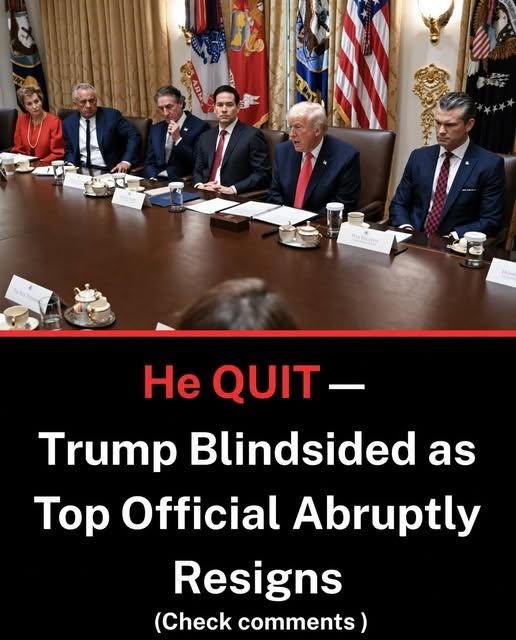
A headline such as “Trump Blindsided as Top Official Quits” can create the impression that an official resigned in protest or that an internal political rebellion is underway.
The available reporting on Fitrell tells a different story.
The State Department described his retirement as the conclusion of a long and distinguished career and said the transition to Pratt was planned. (Conservative Brief)
That doesn’t make the departure unimportant, but it does change how it should be interpreted.
There is currently no strong evidence in the reporting that Fitrell’s retirement was a dramatic protest against President Trump or Secretary Rubio.
Instead, it appears to be a conventional retirement occurring during an unconventional period for the department.
Why Career Diplomats Matter
The significance of Fitrell’s career extends beyond the title he held.
Career diplomats provide institutional memory.
Political appointees can bring new priorities and a direct connection to the president, but career Foreign Service officers often possess decades of experience dealing with particular regions.
They know which diplomatic channels work, which relationships require careful handling and how previous American decisions have shaped foreign governments’ perceptions of Washington.
That knowledge can be difficult to replace.
This issue has become especially prominent since Trump’s return to office. The administration has sought to reshape the federal bureaucracy and place greater emphasis on officials who support its political agenda. At the State Department, that has produced a noticeable turnover among senior career personnel. (The Washington Post)
The challenge for Washington is finding the right balance between political leadership and professional diplomatic expertise.
What Happens Next
The immediate responsibility will fall on Jonathan Pratt as he assumes the senior bureau official position.
Pratt will inherit a region facing enormous challenges.
Political instability remains a concern in parts of Africa. Terrorist organizations continue to operate in several regions. Economic pressures, food insecurity and humanitarian emergencies affect millions of people.
At the same time, African governments are increasingly interested in developing relationships with a wide variety of international partners.
The United States cannot assume that its historical influence will automatically continue.
Diplomats must compete for partnerships through trade, investment, security cooperation, education and development assistance.
That means whoever leads the State Department’s African affairs operation will have an important job.
A Changing Diplomatic Landscape
Fitrell’s retirement ultimately symbolizes a larger transition.
The American diplomatic establishment is changing.
Some changes are being driven by presidential policy. Others reflect retirements and normal career turnover. Still others are connected to broader restructuring inside the federal government.
But the result is the same: a new generation of officials is increasingly responsible for representing the United States abroad.
The Trump administration has made clear that it wants American diplomacy to serve its “America First” philosophy. At the same time, the world is becoming more complicated, not less.
Wars and regional conflicts can quickly affect American interests thousands of miles away. China and Russia are actively competing for influence. African nations are demanding greater independence in their foreign-policy choices.
Diplomats will therefore have to operate in an environment where traditional alliances and assumptions can no longer be taken for granted.
The Bottom Line
Troy Fitrell’s departure from the State Department is an important personnel change, but it should not automatically be portrayed as a dramatic resignation or political revolt.
The available reporting indicates that the veteran diplomat is retiring after a long career, with Jonathan Pratt expected to take over his responsibilities. (Conservative Brief)
Still, the timing makes the transition worth watching.
Fitrell leaves at a moment when the State Department is undergoing major organizational and personnel changes while American diplomacy faces extraordinary international challenges.
His successor will have to navigate relations with dozens of African governments while also confronting competition from China and Russia and implementing the Trump administration’s foreign-policy priorities.
For Washington, the question is not simply who occupies one diplomatic position.
The larger question is what kind of State Department the United States wants—and what kind of diplomatic strategy it intends to pursue in a rapidly changing world.
Fitrell’s retirement closes one chapter in a long Foreign Service career.
What comes next will help reveal the direction of the next chapter in American diplomacy.