
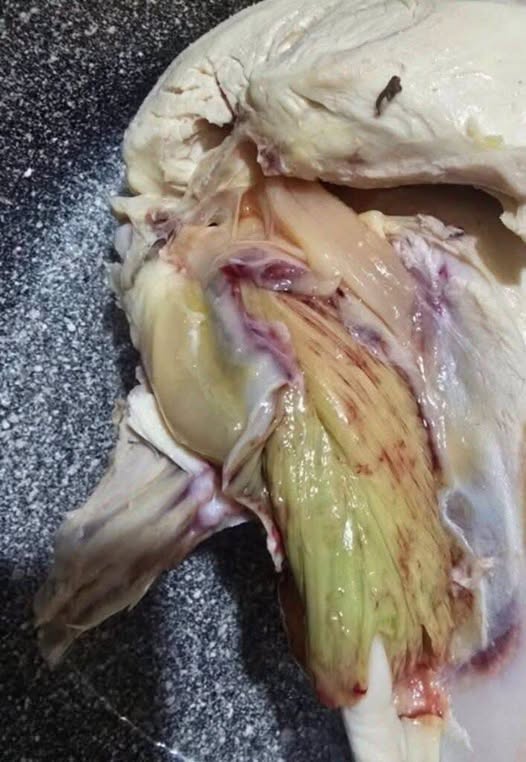
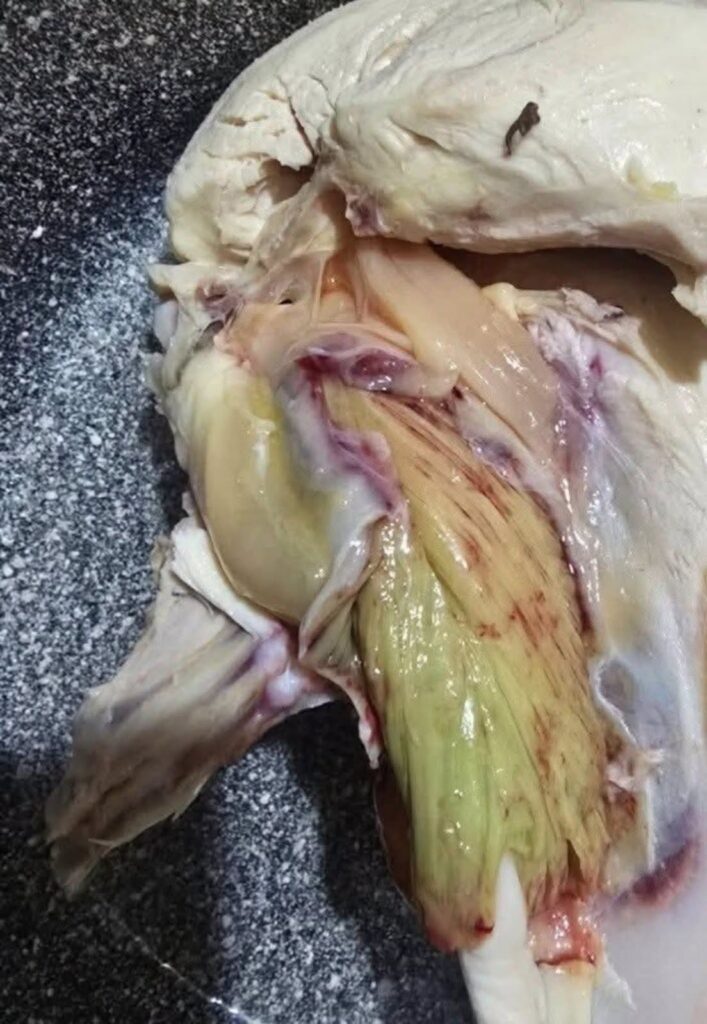
Let me tell you about the first time I encountered green chicken. I was in my late fifties, preparing a quiet dinner at home. I opened a fresh package of chicken breasts and immediately spotted it—a strange green tint hidden deep inside the meat. My heart did a little flip. What was it? Was it safe? Panic set in, and I was about to toss the entire package straight into the trash. But my curiosity got the better of me, and I decided to do some research first. I quickly learned that green chicken is actually quite common, and in most cases, it is not a sign of spoilage at all. There are several reasons why chicken can turn green, and most of them are completely harmless.
The Four Real Reasons Your Chicken Is Green
First, the green color could simply be deep muscle tissue. In some chickens, the deep muscle tissue naturally has a greenish hue. This is just a natural variation in the meat and is completely safe to eat. You will usually notice this as a localized green tint deep within the muscle itself.
Second, it could be a condition known as green muscle disease. Despite the alarming name, this occurs when there is a minor disruption in the blood supply to the breast muscle, causing it to turn green. It remains safe to eat and typically appears as a localized green tint.
Third, the discoloration might be the result of bruising. Just like humans, chickens can bruise during processing. This trauma can leave a harmless greenish or bluish tint on the meat, which is perfectly safe to consume.
Finally, and most importantly, the green color could be a sign of spoilage. If the chicken has been stored improperly, bacteria growth can cause the meat to turn green. Unlike the first three reasons, this is not safe, and the chicken must be discarded immediately.
Identifying the Tint and Checking for Safety
When you encounter a green tint, pay close attention to its appearance. Harmless green chicken usually features a localized tint rather than a uniform color change across the entire bird, and it is often found near the bone.
To determine if your chicken is safe, rely on your senses. Check the color to ensure the green is only in a specific area. Next, check the smell; spoiled chicken will have a distinctly foul odor. Then, check the texture. If the meat feels slimy, sticky, or unusually tacky, it has gone bad. Finally, verify the expiration date and ensure the packaging is intact. If you have any doubts at all, it is always best to throw it out.
What to Do and How to Prevent It
If you find green chicken, do not panic. First, check for the signs of spoilage mentioned above. If the meat passes the smell and texture test but has a localized green spot from bruising or deep tissue, you can simply cut that specific area away. Regardless, always cook your chicken thoroughly to a safe internal temperature to eliminate any surface bacteria. If you are ever unsure about its safety, err on the side of caution and throw it away.

To prevent this from happening in the future, always buy fresh chicken by checking the expiration dates, store it properly in the coldest part of your refrigerator, and cook it to the proper temperature.
Answering Your Common Questions
To address a few frequent questions: Is green chicken safe to eat? As mentioned, it depends entirely on the cause. If it is due to deep muscle tissue, green muscle disease, or bruising, it is safe. If it is caused by spoilage, it is not.
What does spoiled chicken smell like? It will have a distinctly foul, unpleasant odor. What does it look like? Beyond discoloration, it will often look slimy or feel sticky to the touch.
How long does raw chicken last in the fridge? Generally, it should be cooked or frozen within two to three days. Can you freeze it? Yes, freezing is a great way to extend its shelf life. And what temperature should it be cooked to? Always ensure your chicken reaches an internal temperature of 165 degrees Fahrenheit, or 74 degrees Celsius.
A Final Thought
When I first saw that green chicken, I was genuinely worried. But doing a little research taught me that it is usually harmless. It was a wonderful reminder that not everything in the kitchen is as scary as it initially seems.
Have you ever opened a package of meat and found green chicken? What did you do? Please share your story in the comments below.
