
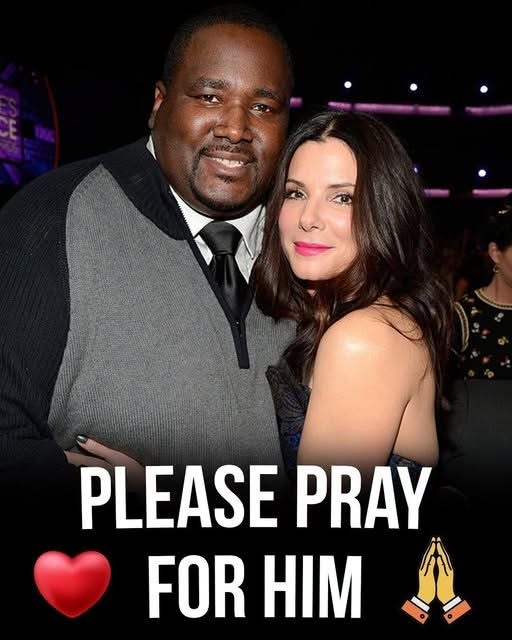
A photograph of a smiling couple has recently been accompanied by an emotional message urging fans to “pray for him,” followed by the dramatic headline: “He’s Fighting for His Life — Fans Are Heartbroken.” The combination of the affectionate photograph and the alarming wording has understandably prompted concern among people who encounter the post online.
However, there is an important distinction between a viral social-media headline and confirmed information about a person’s health.
The photograph itself shows a man and a woman posing together at what appears to be a public entertainment event. They are smiling for the camera, standing close together, and appear to be enjoying the occasion. Nothing visible in the photograph indicates a medical emergency. The words placed over the image are what introduce the suggestion that the man is experiencing a serious health crisis.
That distinction matters because emotional celebrity posts can spread extraordinarily quickly, sometimes before reliable information about the circumstances behind them is available.
Why Fans React So Strongly
When audiences become familiar with a public figure, that person can begin to feel like a familiar presence in their lives. Years of movies, television appearances, interviews, performances, and public events can create a strong emotional connection between celebrities and their audiences.
As a result, news suggesting that a beloved personality is seriously ill can produce an immediate emotional response.
People may share messages of support, leave prayers in the comments, or tag friends who they believe should know about the situation. Within a short period, a post can accumulate thousands or even millions of views.
The emotional nature of these posts is precisely what makes verification so important.
A headline such as “He’s Fighting for His Life” communicates a very specific and extremely serious claim. If the claim is accurate, it deserves careful reporting and compassion. If it is exaggerated, outdated, or unsupported, repeating it as fact can cause unnecessary distress for the person involved, their family, and their fans.
What the Photograph Actually Shows
The image accompanying the headline is much more ordinary than the dramatic wording suggests.
It shows a man dressed formally in a dark-and-gray outfit alongside a woman wearing an elegant black dress. They appear to be attending a public event, with lights and other attendees visible in the background.
Both are smiling toward the camera.
The photograph therefore appears to be a celebration or entertainment-event image rather than a photograph documenting illness or hospitalization.
There is no visible medical equipment, hospital environment, or other evidence in the picture itself that establishes a health emergency.
That does not prove that the headline is false. A photograph taken at an earlier time obviously cannot tell viewers what happened to someone later. But it does mean that the image should not be treated as evidence of the medical claim.
The Problem With Viral Health Headlines
Health-related celebrity stories are particularly vulnerable to sensationalism.
A dramatic headline can generate enormous attention because people naturally want to know whether someone they recognize is safe. Unfortunately, that same emotional reaction can be exploited by pages seeking clicks, advertising revenue, or social-media engagement.
A post may use words such as “urgent,” “heartbreaking,” “pray,” or “fighting for his life” without providing a reliable source.
Sometimes the original event may be old.
Sometimes the person may have experienced a health problem that was less severe than the headline suggests.
Sometimes the story concerns someone else entirely.
And sometimes there may be no credible evidence behind the headline at all.
For that reason, readers should look for a statement from the person’s family, representatives, verified social-media account, hospital, or a reputable news organization before accepting a serious medical claim.
Why the Couple’s Photograph Is So Powerful
The photograph itself contributes to the emotional impact of the post.
Rather than showing a distant red-carpet image, it captures the pair standing closely together and smiling. The woman’s affectionate pose and the man’s expression create an impression of warmth and friendship.
That makes the accompanying message feel personal.
Viewers may immediately begin wondering what happened, when it happened, and whether the couple’s relationship has changed since the photograph was taken.
But photographs often outlive the moment in which they were captured.
An image from a public event can remain online for years. It can later be reused to illustrate an unrelated story simply because the people in it are recognizable.
That is one of the central challenges of modern celebrity news: an authentic photograph does not necessarily guarantee an authentic caption.
The Difference Between Concern and Confirmation
There is nothing wrong with fans expressing concern.
If a public figure really is facing a serious health challenge, messages of encouragement can provide an important sense of community. Celebrities themselves sometimes acknowledge how meaningful supportive messages can be during difficult periods.
The problem arises when concern is presented as confirmation.
A social-media post saying “please pray for him” may encourage thousands of people to assume that a specific medical emergency has been confirmed, even when the post provides no evidence.
That can create a chain reaction.
One person shares the post because they are worried. Another person sees the share and assumes it is trustworthy. They share it again. Soon, the original claim can appear to have been confirmed simply because so many people are repeating it.
Repetition, however, is not verification.
How Fans Can Check the Story
When a celebrity health story begins circulating, there are several simple ways to determine whether it is genuine.
First, look for the date.
An old story can be presented as though it happened today. Checking when the original report was published can immediately clarify the situation.
Second, look for a named source.
A trustworthy report should identify where the information came from. A statement from a family member, representative, official account, or reputable publication carries considerably more weight than an anonymous social-media page.
Third, avoid relying on the photograph itself.
The image may be authentic, but that does not mean the caption is accurate.
Finally, be careful with posts that deliberately create urgency without providing details. Genuine breaking news can certainly be dramatic, but credible reporting normally includes verifiable information rather than simply asking readers to react emotionally.
The Human Side of Celebrity Health Stories
There is also a human consideration that is easy to overlook.
Public figures may be accustomed to attention, but illness is deeply personal. A person’s health belongs to them and their family, and not every medical situation needs to become public immediately.
Families may need time before releasing information.
Representatives may need to confirm details.
A person may choose not to discuss a diagnosis publicly at all.
That is why responsible coverage should avoid speculation.
It is possible to express sympathy without pretending to know facts that have not been established.
A simple message wishing someone well can be compassionate. Claiming that a person is “fighting for his life” without confirmation is something entirely different.
Why Fans Feel Heartbroken
The phrase “fans are heartbroken” is another common feature of viral celebrity headlines.
It is certainly possible for fans to experience genuine sadness when they hear troubling news about someone they admire. But headlines sometimes use the phrase automatically because it heightens the emotional impact of the story.
The emotional response may also depend on a person’s history with the celebrity.
Someone who grew up watching a particular actor or performer may feel as though the person has been part of their life for decades. News about serious illness can therefore feel surprisingly personal.
That emotional connection is one of the most powerful aspects of popular culture.
It also explains why responsible reporting matters so much.
A Photograph Can Preserve a Happy Moment
There is something poignant about the image itself.
Whatever the circumstances surrounding the photograph, it captures a moment when the two people appear happy and relaxed. They are dressed for a special occasion, standing together beneath the lights, and smiling for the camera.
That is ultimately what the photograph can tell us.
It preserves a moment.
It does not tell us everything that came before or everything that came afterward.
That is why photographs should be appreciated for what they document rather than used to manufacture stories that the image cannot support.
The Bigger Lesson for Social Media
This story also illustrates a much larger change in the way people consume news.
Traditional news organizations generally have editorial processes designed to verify important claims before publication. Social media operates differently. Anyone can create a post, add a dramatic photograph, and publish a headline within seconds.
The most emotional posts can spread faster than the most accurate ones.
This does not mean everything on social media is false. It simply means that readers have to become more careful about distinguishing information from engagement-driven content.
A claim involving someone’s health deserves an especially high standard of evidence.
Final Thoughts
The viral message claiming that a man pictured in the accompanying photograph is “fighting for his life” is clearly designed to provoke an emotional reaction. The photograph itself shows a smiling couple at a public event, but it does not provide evidence of a medical emergency.
Until a serious health claim is confirmed by a reliable source, it is better to treat the headline cautiously rather than repeat it as established fact.
Fans can still express compassion. They can hope for the best, send positive thoughts, and wait for trustworthy information.
In an age when emotional headlines can travel around the world within minutes, that combination of compassion and caution is more important than ever.
Behind every viral photograph is a real person, and behind every health headline is a human life. Whether the story ultimately proves serious, exaggerated, outdated, or simply misleading, the people involved deserve accuracy and respect.
The most responsible response to an alarming celebrity-health post is therefore not to panic, but to pause, verify the information, and remember that a dramatic caption is not the same thing as confirmed news.